Something I’ve been wanting to try out is building a quinzhee – a type of snow shelter similar to an igloo, but made without the finesse, by creating a big pile of snow, letting it harden for while and then excavating out a space within.
There are plenty times in winter when there aren’t sufficiently deep banks to snowhole, and many places where there’s distributed snowfall but not very deep, and being able to create a shelter using available snow depth would widen the scope of when and where one can use a snow shelter.
There’d been some fresh snowfall and I headed out for the day to Keiloch to go and find some hopefully accumulated in a lee slope. I decided that as such a shelter was entirely experimental, and the chances of failure high, that I’d just build but not stay, so had a lighter load with build kit but no sleep or cooking kit. The forecast was for quite high wind, but with not much winter weekends remaining I thought I’d give it a go.
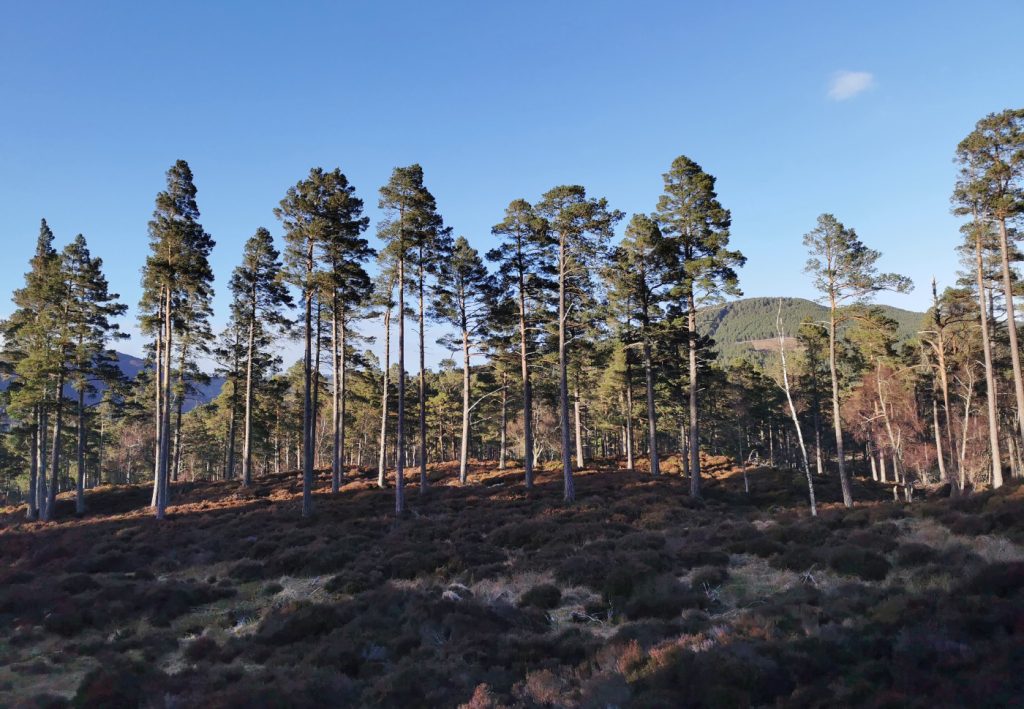
Up through the forest was a spring delight, sunshine sparkling through pines. I looked in a few pools beside the track – frog spawn but no newts, and distant mountains gleamed with snow. Just before I cleared the forest I remembered a useful tip for quinzhees – using twigs inserted on the outside which then help when carving out the inside to gauge thickness remaining, so I collected a bundle of about a dozen.
The Feindallacher Burn was no longer snow-bridged, but still had some snow banks. An assortment of logs were lying beside the site of the removed hut, I wondered if they were going to rebuild, but then at the crossing point – no footbridge – for whatever reason they’d dismantled it, but fortunately this high up there wasn’t much snow melt flowing so got across using boulders ok.
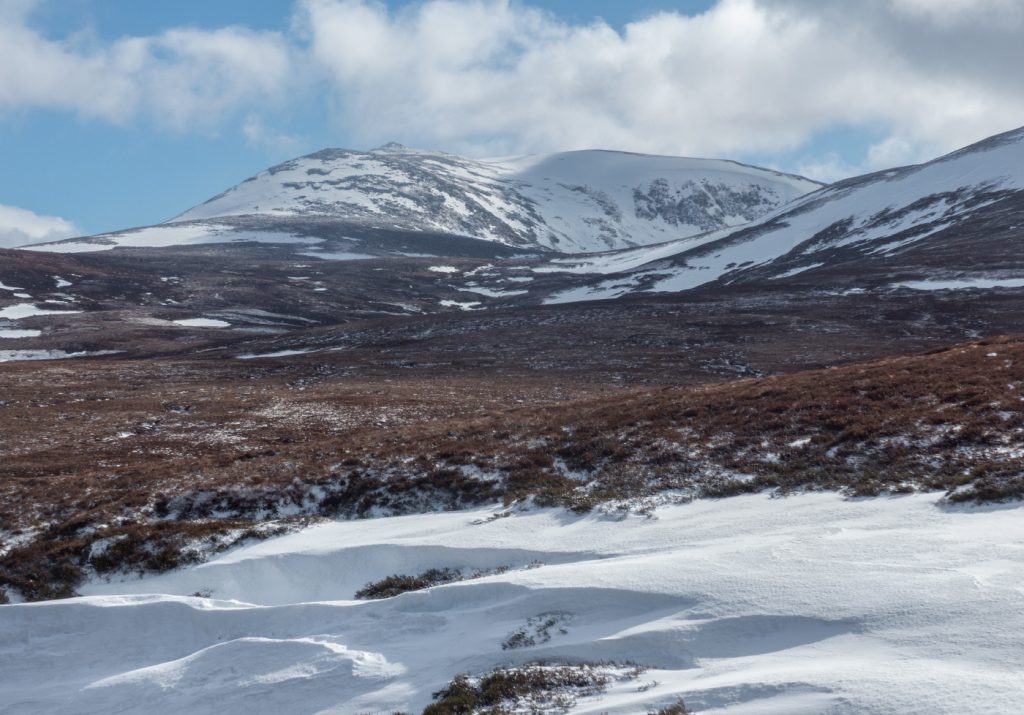
I followed the path then diverged into the Sagairt col gully, thinking this might be the first opportunity for some fresh snow to use. As I ascended I took note of some holes in the snow pack with deep drops to the stream. The wind was being funneled through the gap, and underfoot there was only a thin covering over hard and slippy snow, and I almost had to get the crampons on as it steepened.
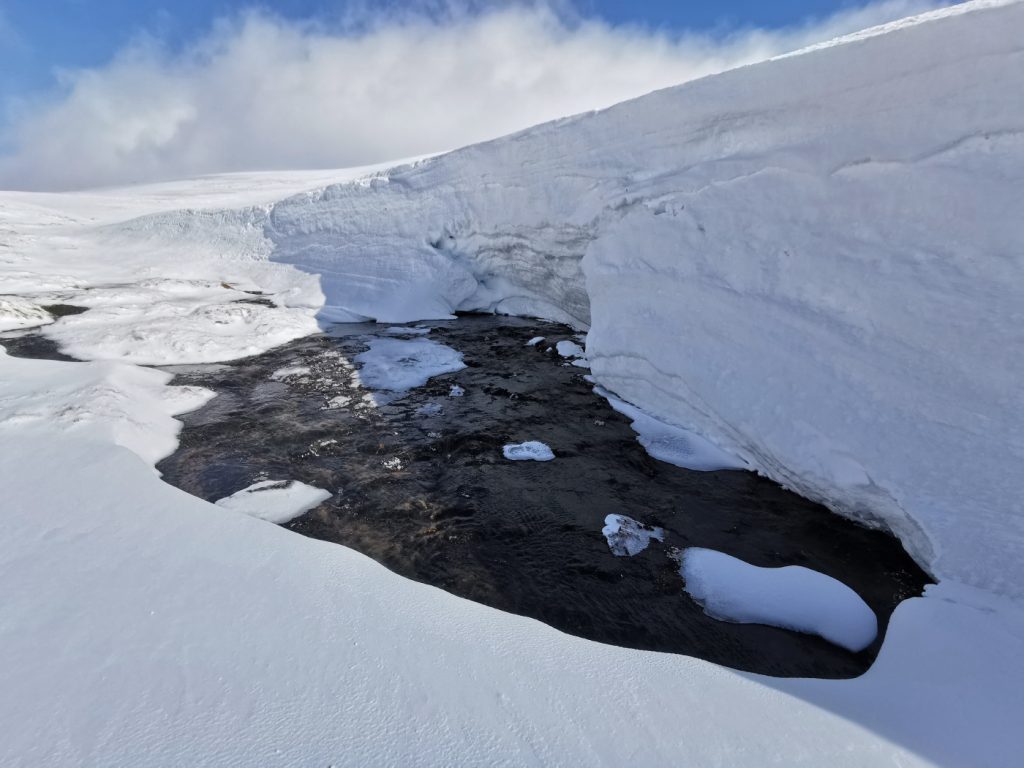
I headed over to the Beag-Boideach col, and could see the big snow banks still along the stream. The lee side of Carn an t-Sagairt Beag had some drifts but they were on steeper ground higher up which I didn’t fancy climbing up to. The wind had picked up and was blowing a real hoolie, with spindrift tendrils creeping along the hillsides.
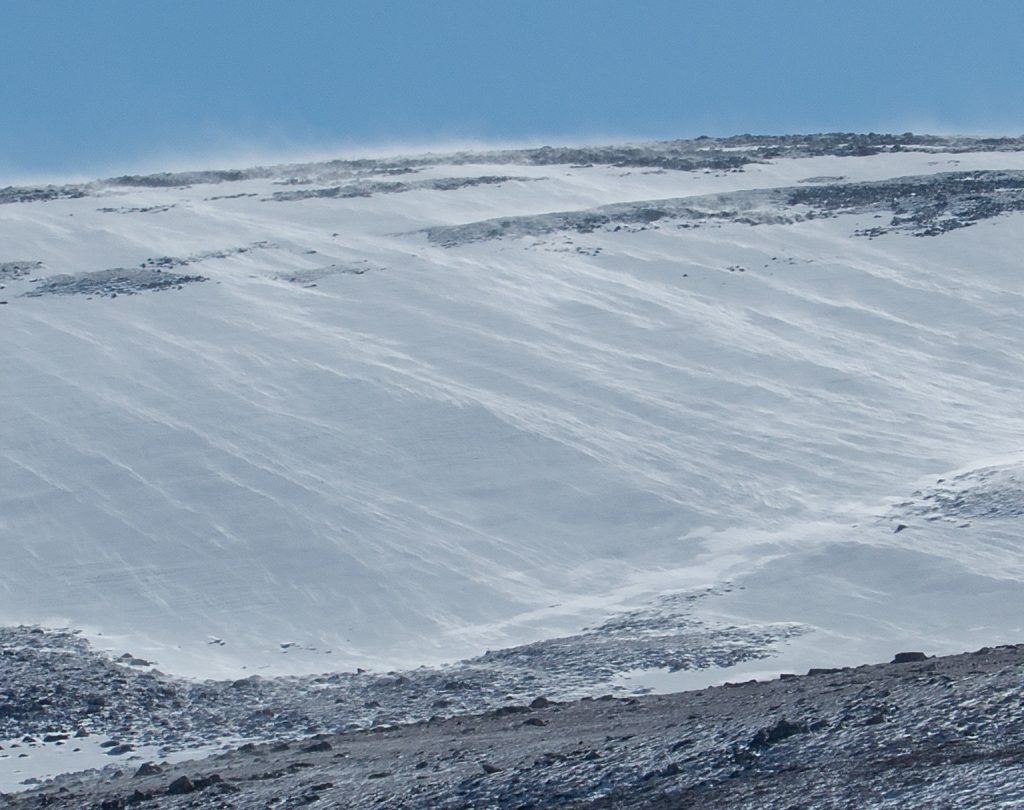
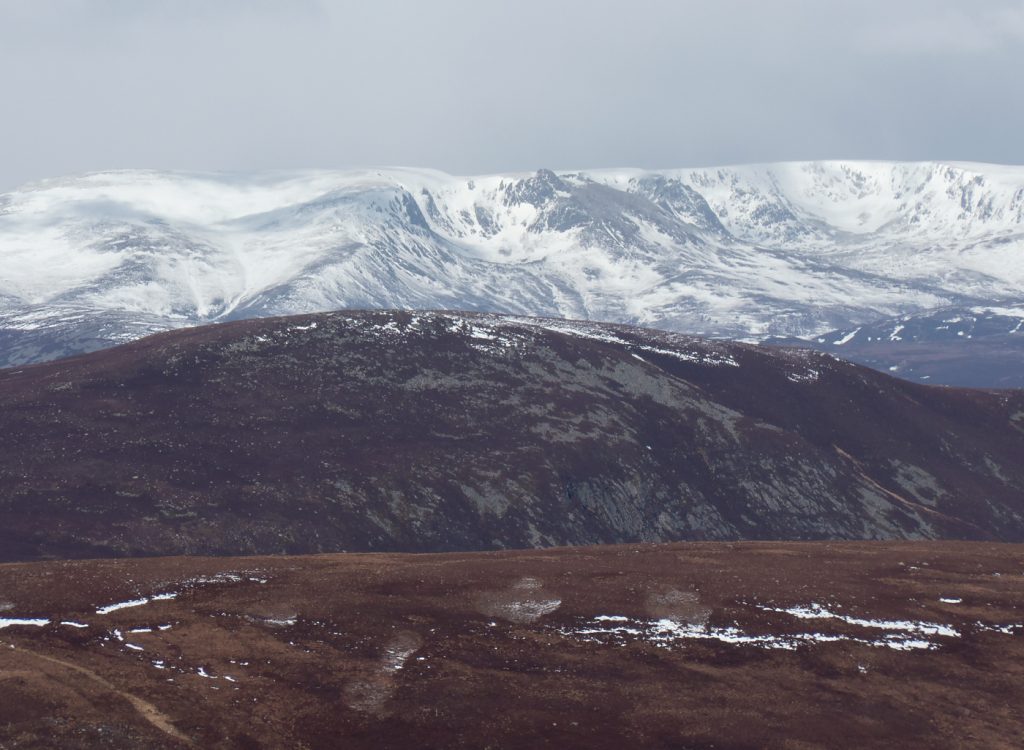
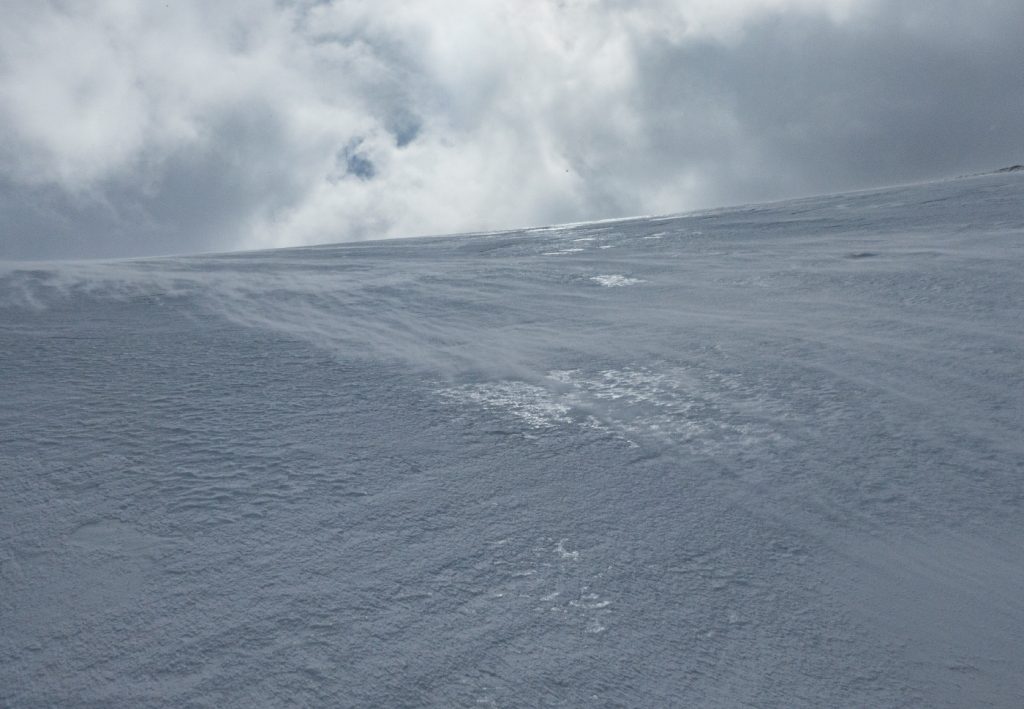
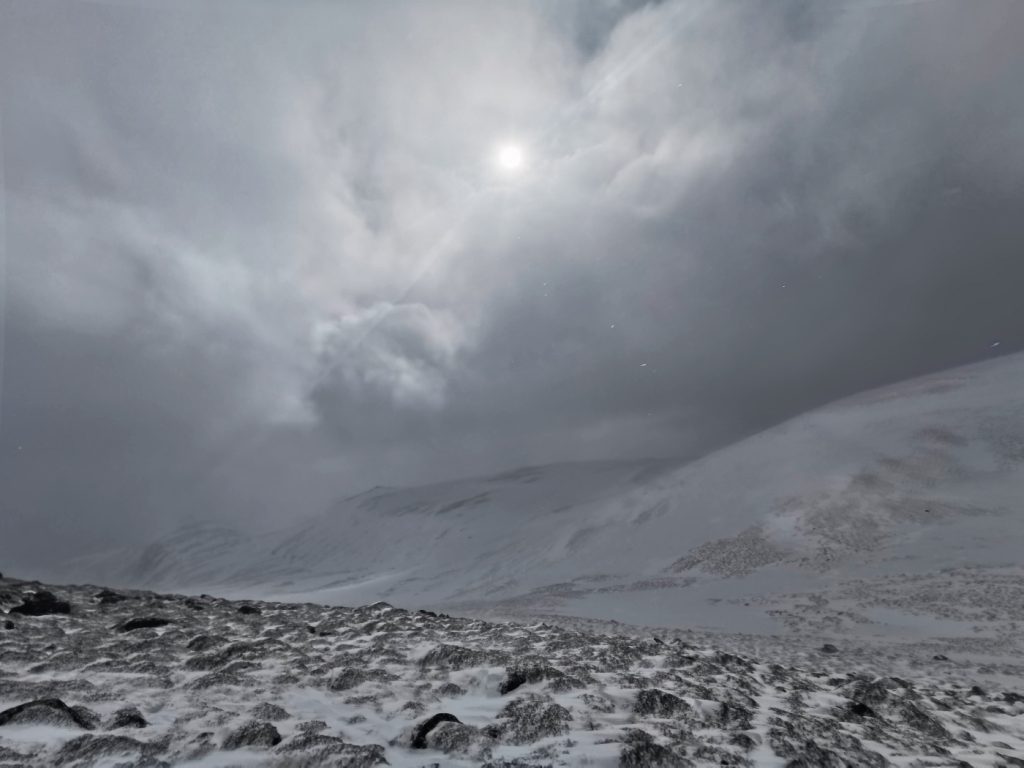
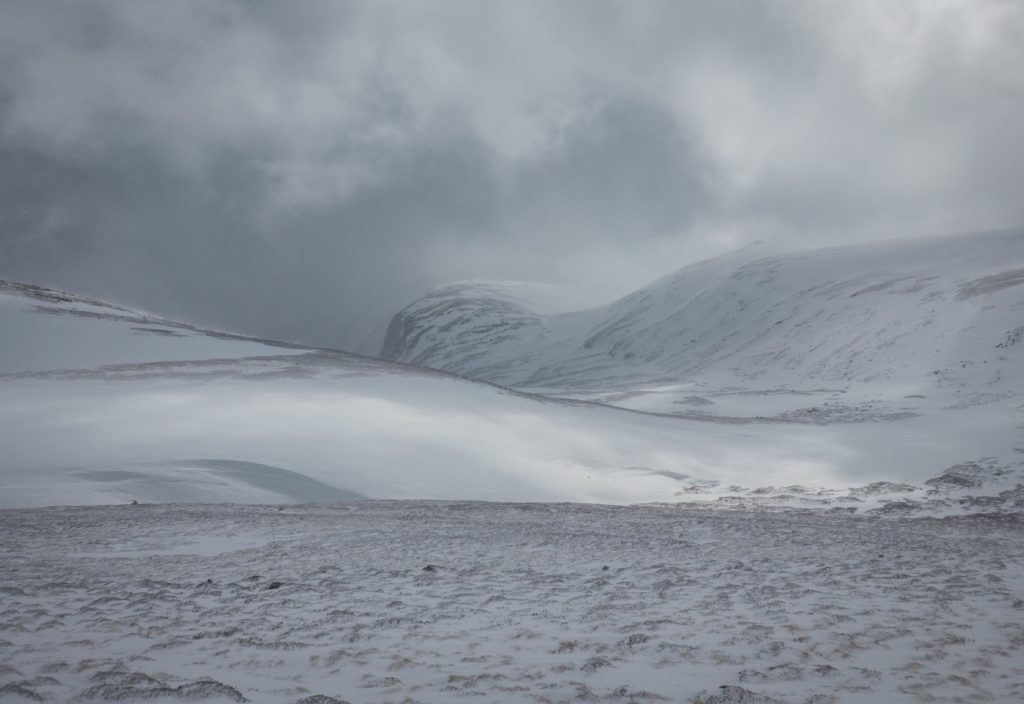
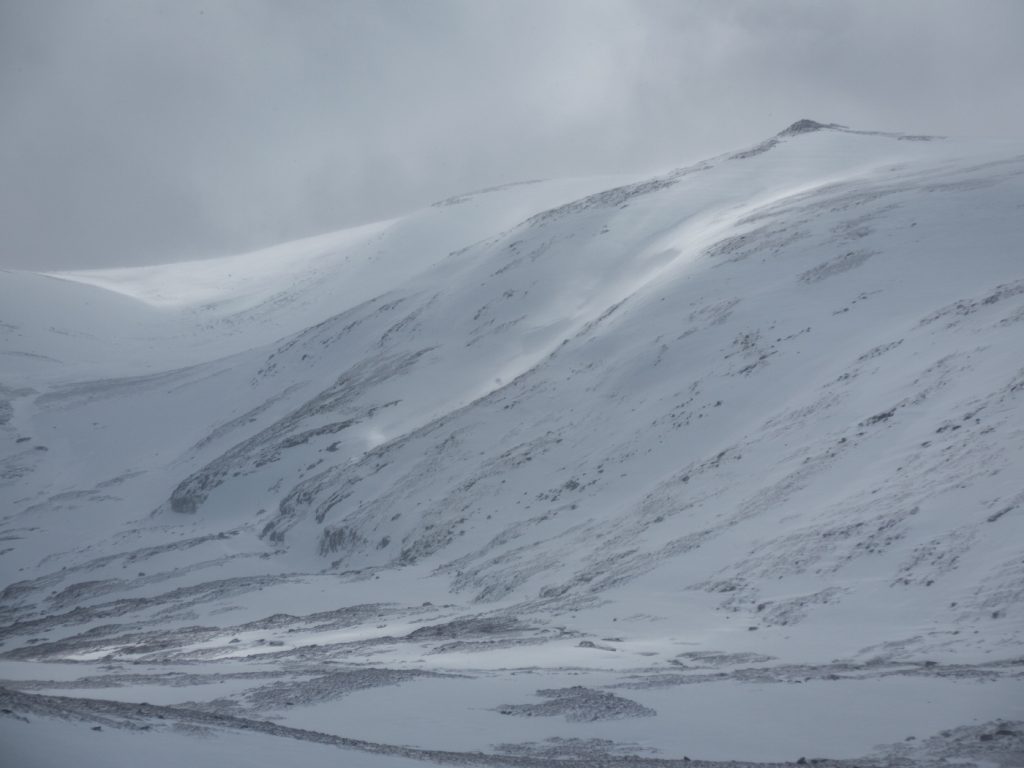
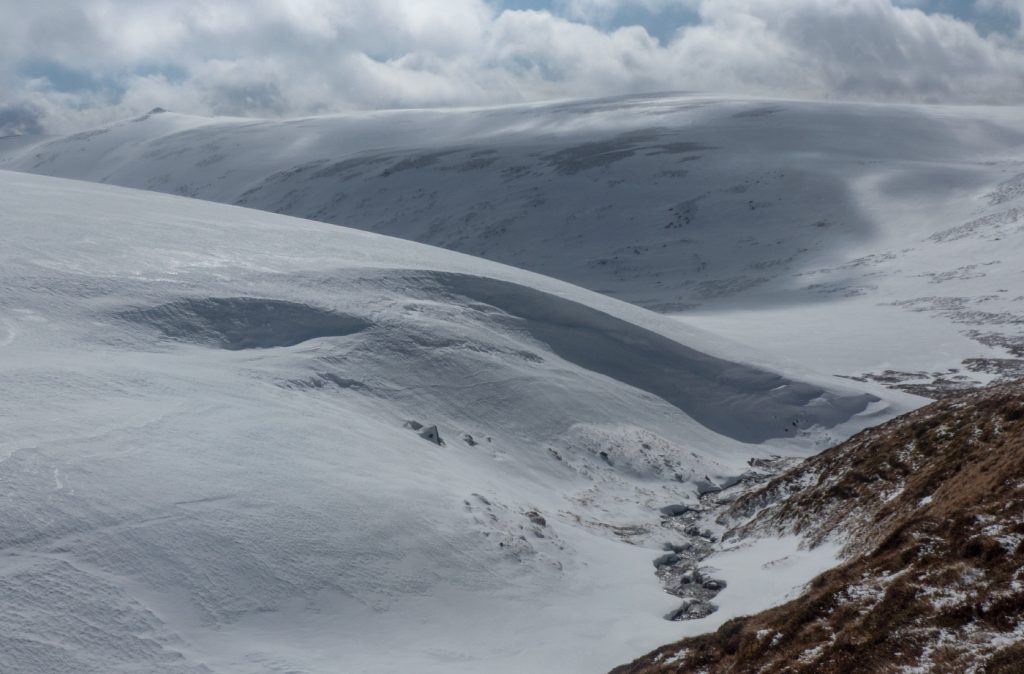
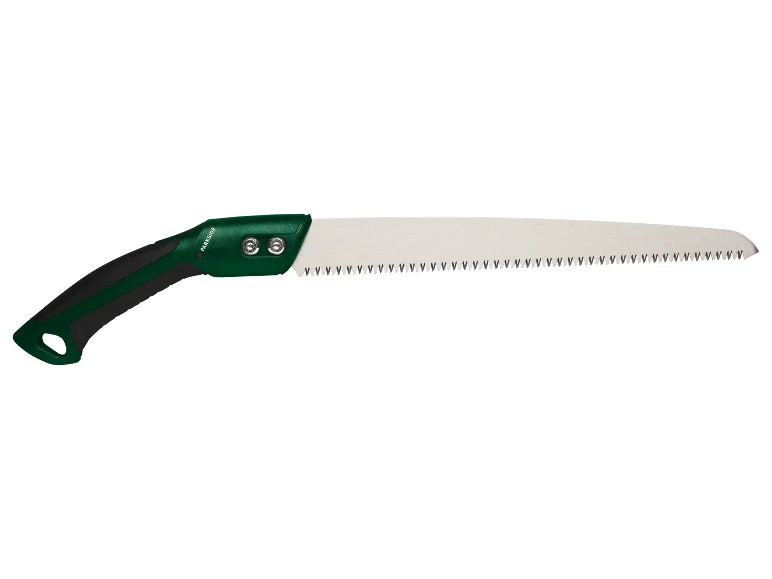
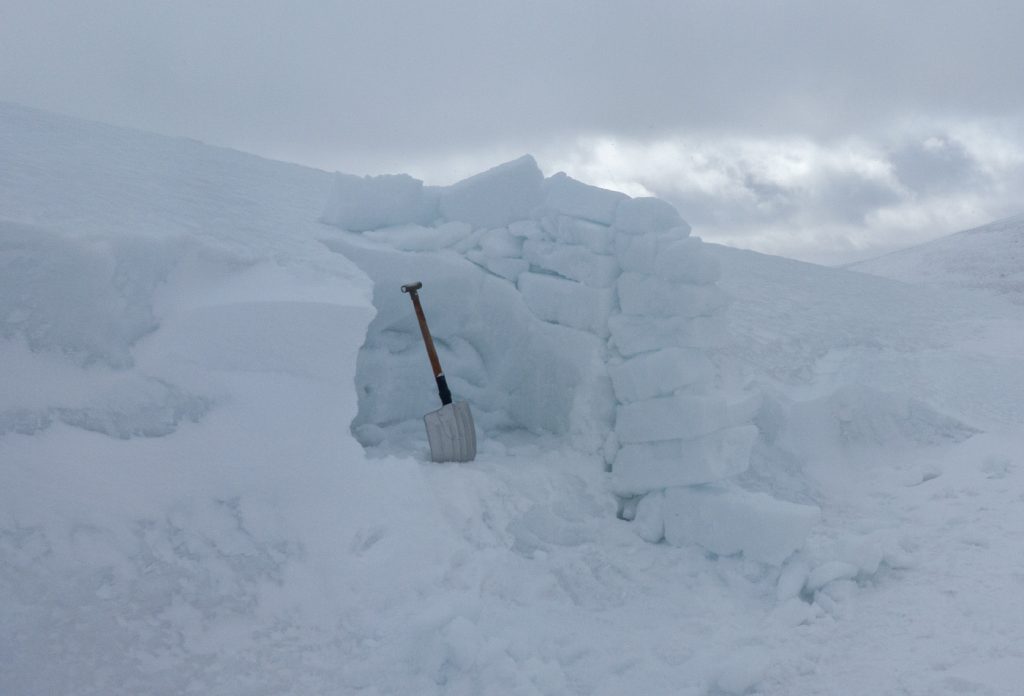
It was time for lunch but realistically there was nowhere with any shelter nearby. I decided to see if I could hack out a nook from the stream snowbank. An initial test with an avalanche probe said otherwise – the snow was that hard that it couldn’t penetrate without risk of snapping it. I had however taken a new saw with me – a £4.99 bargain from Lidl (for gardening pruning) and I tried it out managing to cut in and then lift out a block. Once I had a chink in the hard face, it was easier to cut down for more blocks. A foot back from the hard face, the snow became more granular and diggable, and I got the shovel out which then expedited excavation.
Having refreshed, I headed on to Coire Boidheach unsure if there’d be new snow to pile, but also now the wind was screaming past at 1100m, whether any pile created would stand the onslaught – part of building a quinzhee is letting the pile “sinter” i.e. digging it and then reforming it generates a state change where it will bond and harden sufficiently to become structural and excavatable. I didn’t think the necessary hour plus would be sustainable either, the windchill was intense.
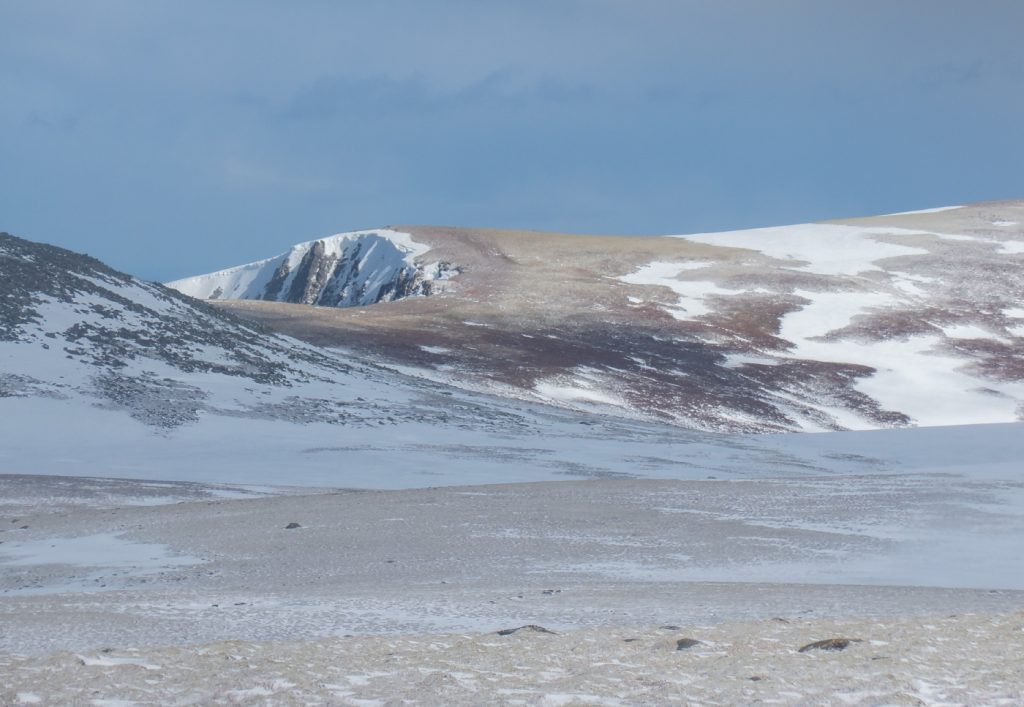
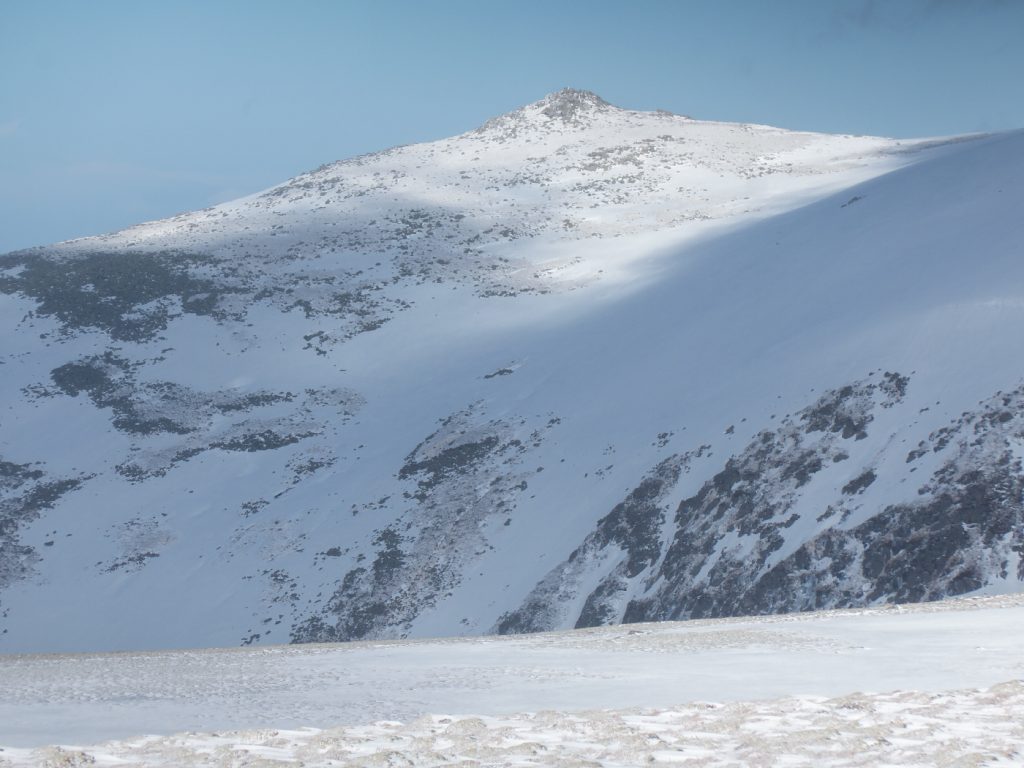
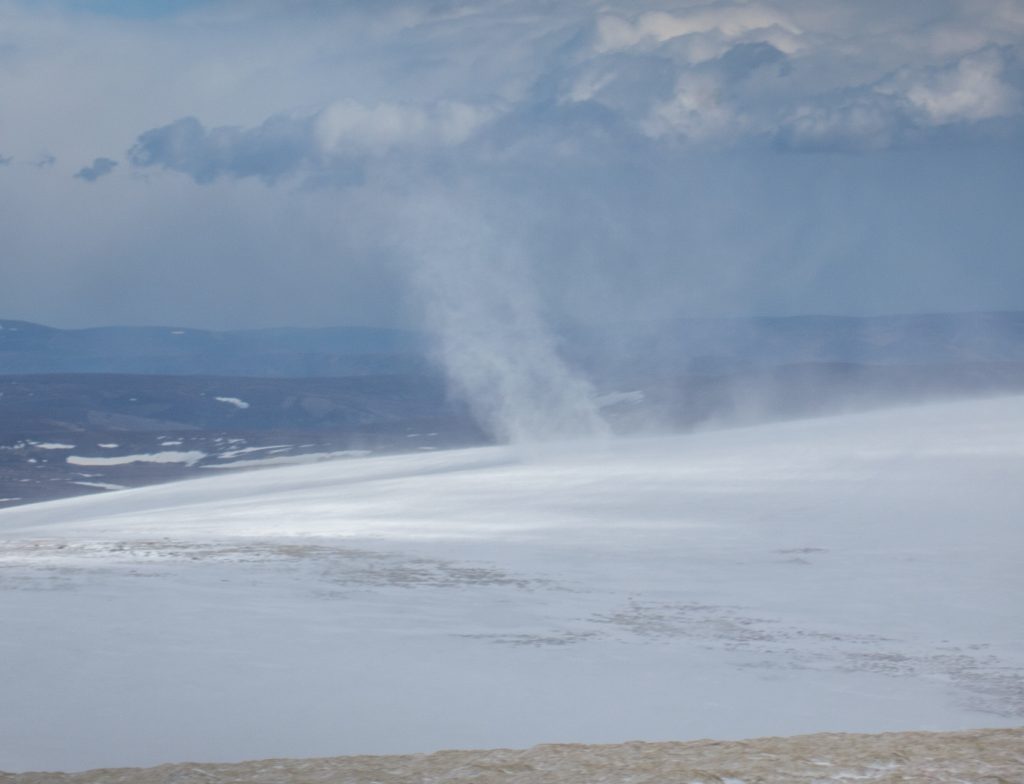
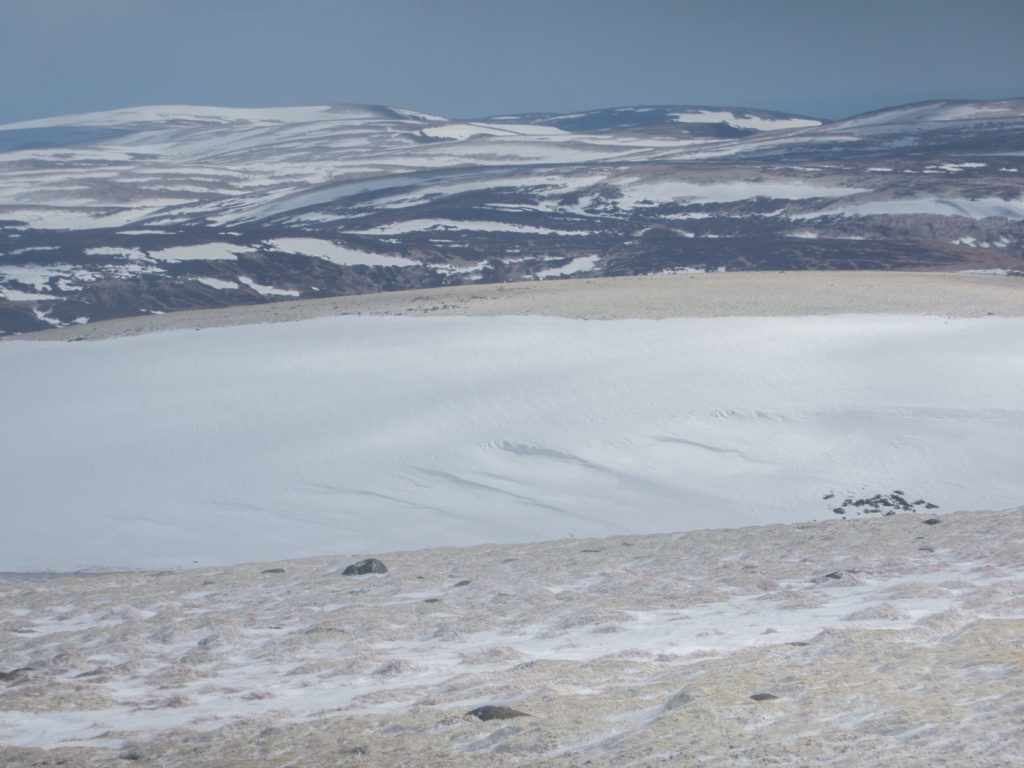
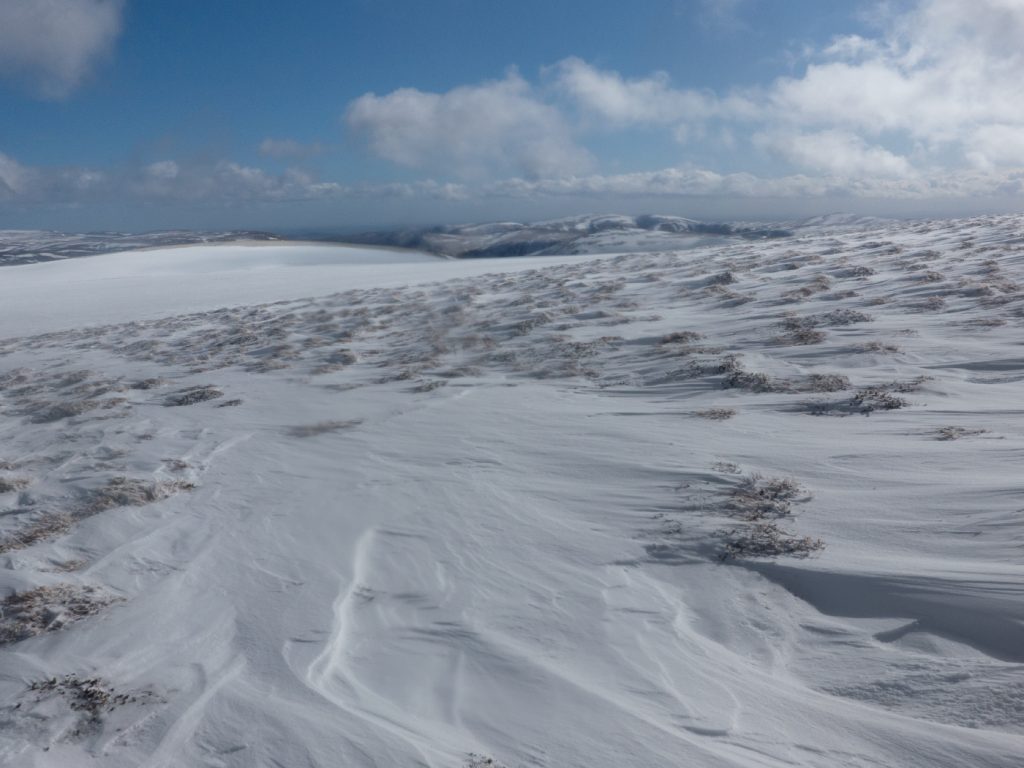
Further towards Eagles Rock I could see the remnant snow ridges where I’d snowholed, and the hilltop above Coire an Daimh Mhoile has snow vortexes rising and spinning high over the plateau. I looked at my watch – I was behind schedule to reach this point, and with the increased difficulty in conditions decided to turn towards descent, but now facing into the teeth of the wind.
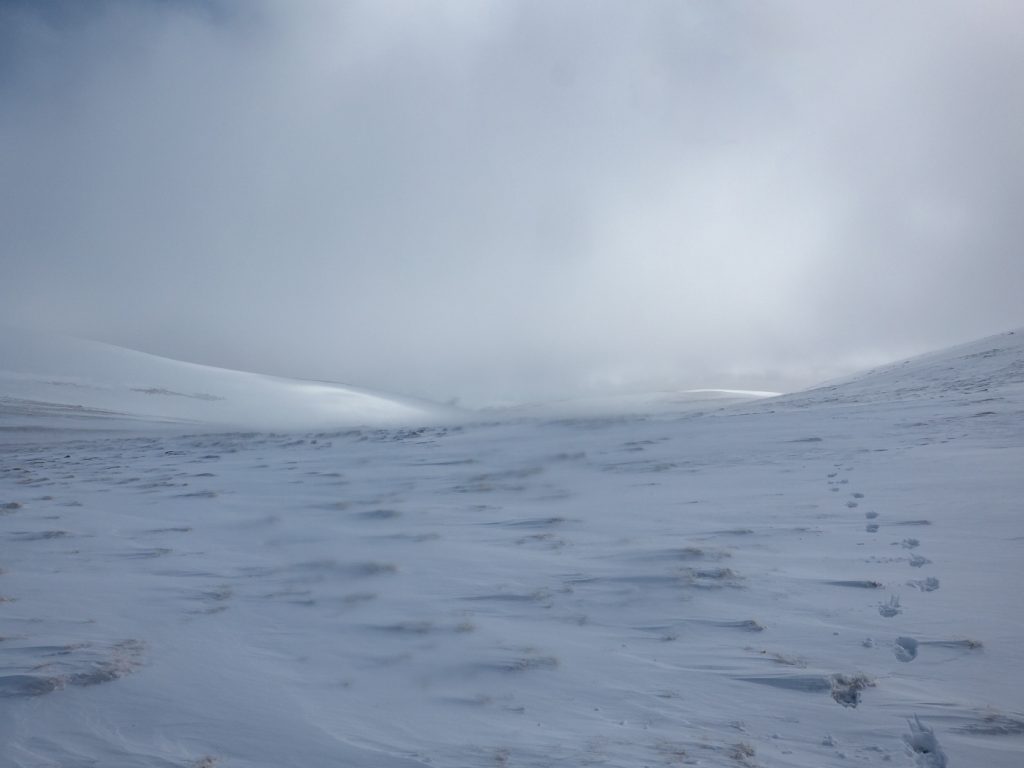
I headed near to The Stuic and could see the edge of the cliff. There’d been a few mild snow showers earlier but I’d not paid enough attention to incoming weather, and at the moment I stepped off the scoured rock-strewn ground on to a large hard snow patch, a snowstorm engulfed me into a whiteout, and a sudden increase in windspeed again had me staggering. Feeling disorientated and storm-smashed, I decided to backtrack to the bouldered ground so I had visual reference to steady myself and regroup and get organised to descend safely, conscious with a large drop nearby and slippery underfoot, it was no time to meander carelessly. There was a boulder a couple feet tall which was as good a windbreak as I ‘d get here, I needed to poke into my rucksack carefully – anything loose dropped into the maelstrom would not be seen again. Lying on the ground I got my goretex on, a safe bearing with some margin of error set on the compass, and then braced myself back upright to now battle down to hopefully some visibility and to find the top of the Allt a Choire Dhuibh which would a useful handrail down without straying near the cliff edges.
At the stream gully back on hard steeper snow the axe came back to hand, and as the visibility cleared I descended somewhat more confidently. My hands were beginning to suffer despite being double-clad in fleece liners and heavy mitts. I decided to contour around and down into The Stuic corrie where there would be some respite and a nice view, though I could have followed the stream down for a good mile on hardpack snow.
It was a different world in the corrie – perhaps 20 degrees different in perceived temperature, and the howling storm above only noticeable by the occasional frond spilling over the cliff edge. I spent a moment massaging my hands now stinging as full feeling came back into them; I’d now run out of time to explore towards the pools and lochans despite the blue skies reappearing, and began making for the Feindallacher.
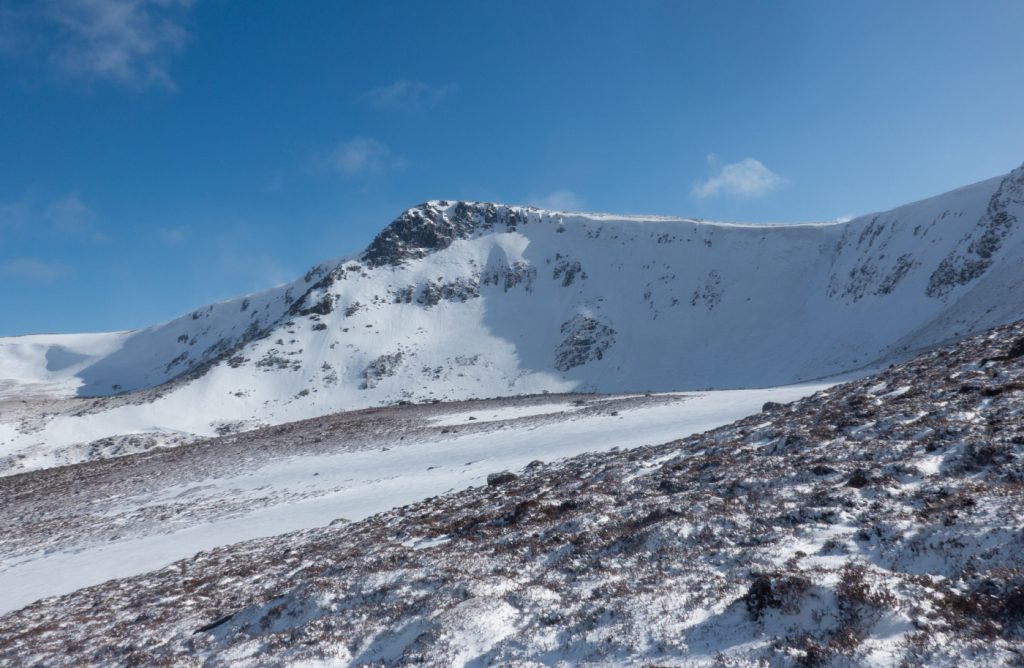
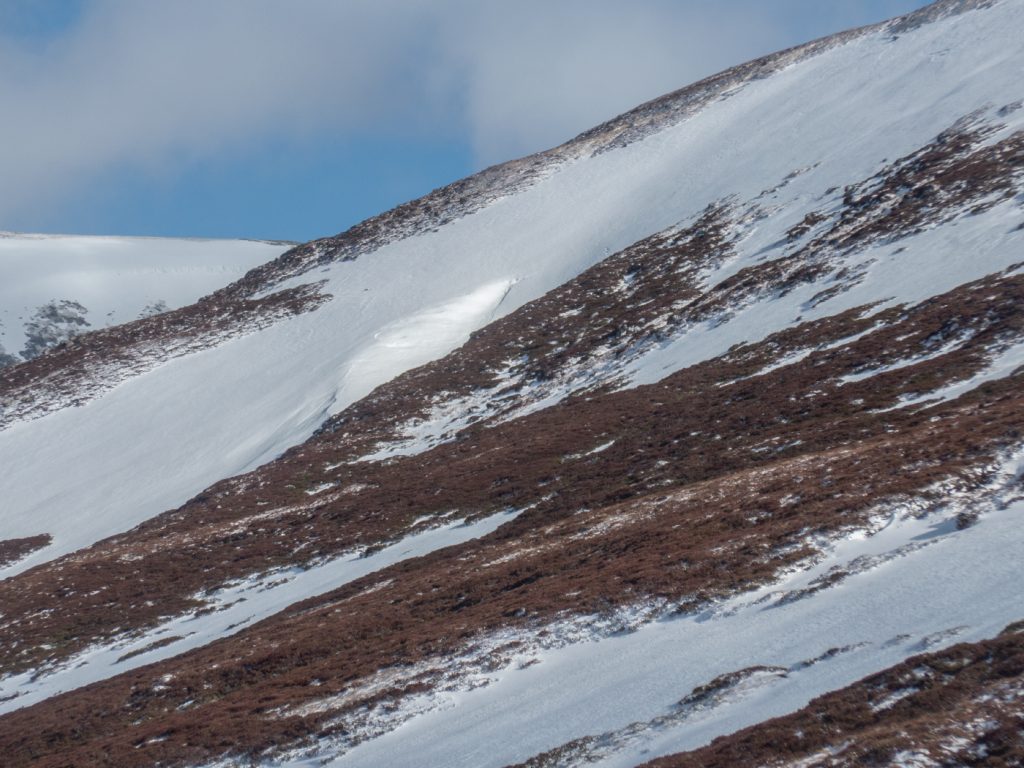
After some contouring back around the west spur, progress was slowed by traversing a number of large and steep snow patches, and I thought a singular long glissade would take me down to a height where they began to fizzle out.
I looked down a long slope, repositioned a bit further left to avoid a rock sticking out half way down, then sat and began to slide. Within moments of starting I thought “uh oh..” as the speed crept up and up, I leant on the spike of my ice axe but it was failing to moderated speed.. there was a “fuck that!” moment and I span into an ice axe arrest, the pick skittering then biting and bringing the slide under control.
Yikes. Looking down, I’d maybe only dropped 20 or 30 metres of 100+ needed. Well, I was committed, now – while hanging by the pick, I couldn’t also use the axe to cut a step to sit to don crampons (you don’t glissade with crampons on as if they catch at speed you can break a leg).
So down we went again. I let the pick out, sat back up, plummeted the spike and away we went again.. Assorted foot flailing wasn’t effective in either slowing or steering, it just made posture erratic and arrest more irregular. Each time I quickly moved from scraping the spike to flip into on to my front to arrest there was alarming acceleration of a second, then the violent grind of the pick into the snowface, spraying ice into my face.
I was glad to eventually flumph into the heather at the bottom away from boulders, drops or bogs. Now it was just rough heather and bog back to the Feindallacher.
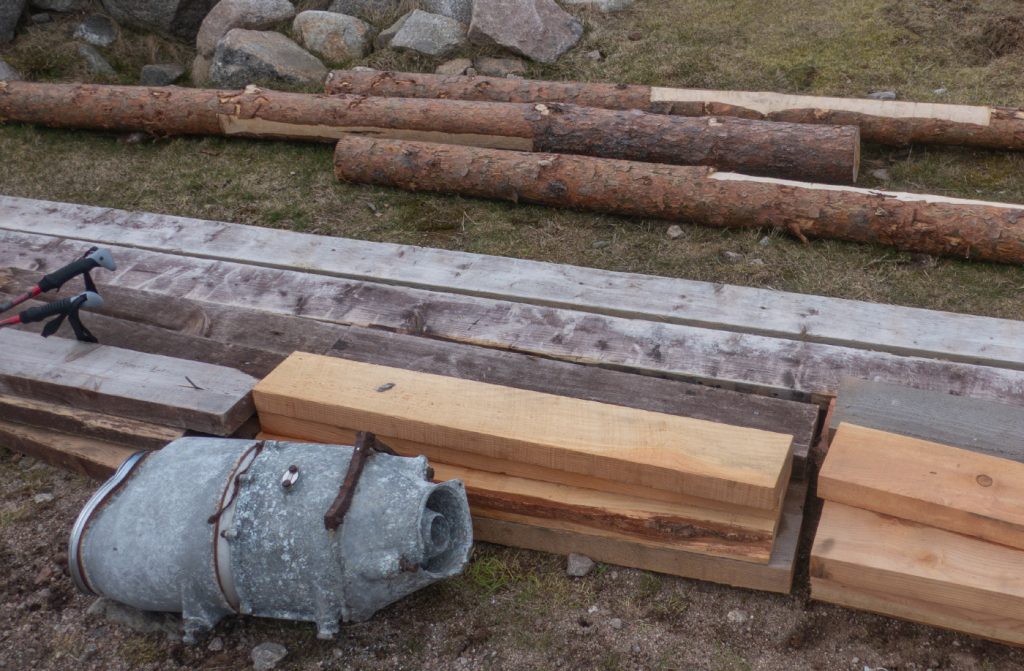
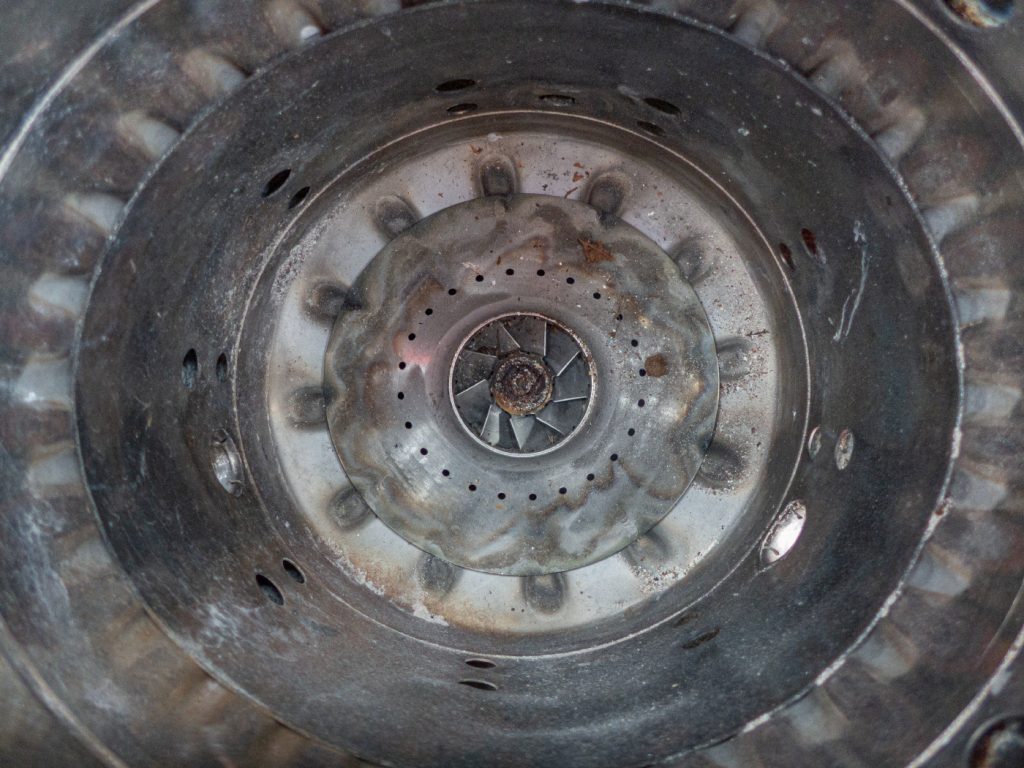
Back across the river and on to the track, as I passed the clump of wood I noted another object, looking old and metal. Closer inspection showed radial innards and turbine like bits – I presume this is a part of the air crash wreckage from Carn an t-Sagairt Mor, perhaps over time it’s made it’s way into the river and been lifted out when dismantling the footbridge.
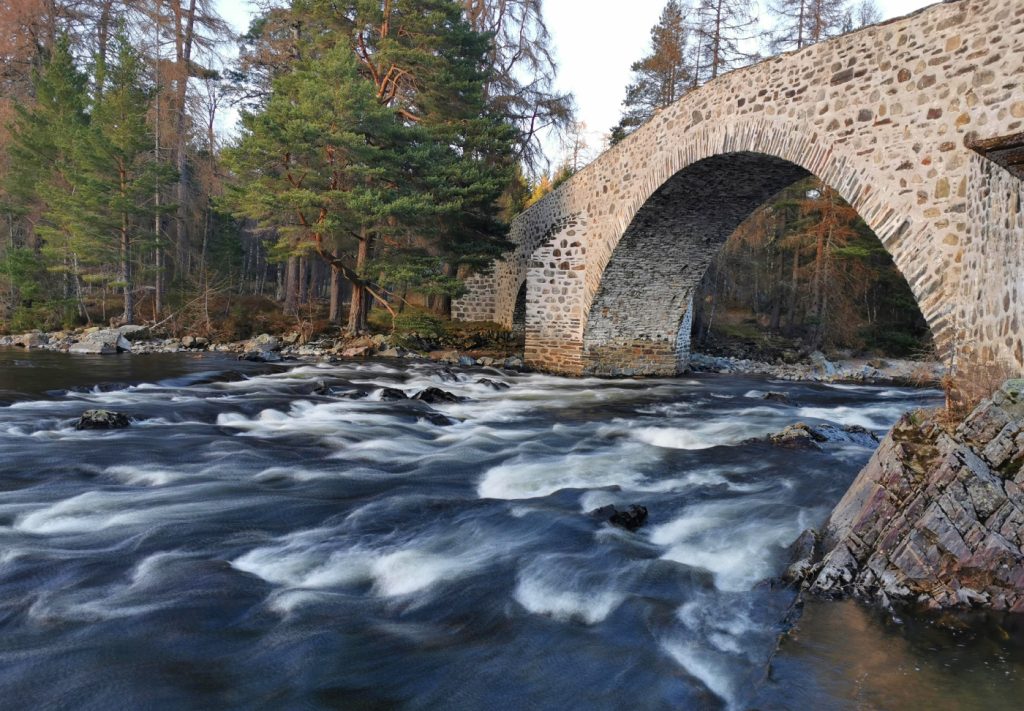
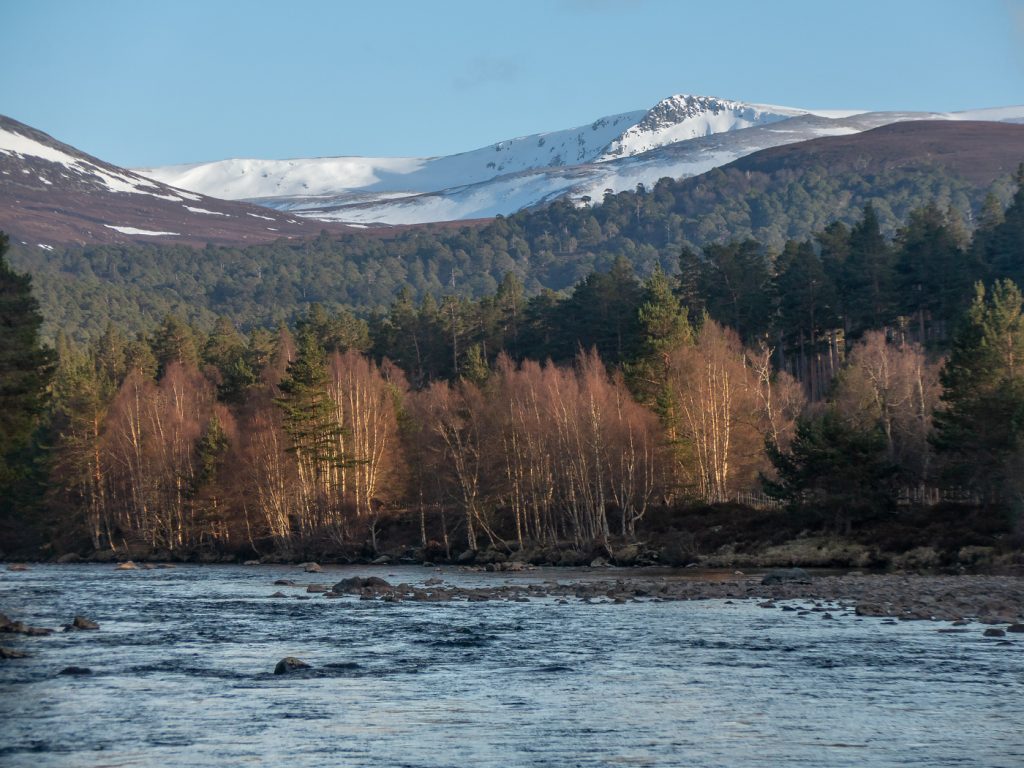
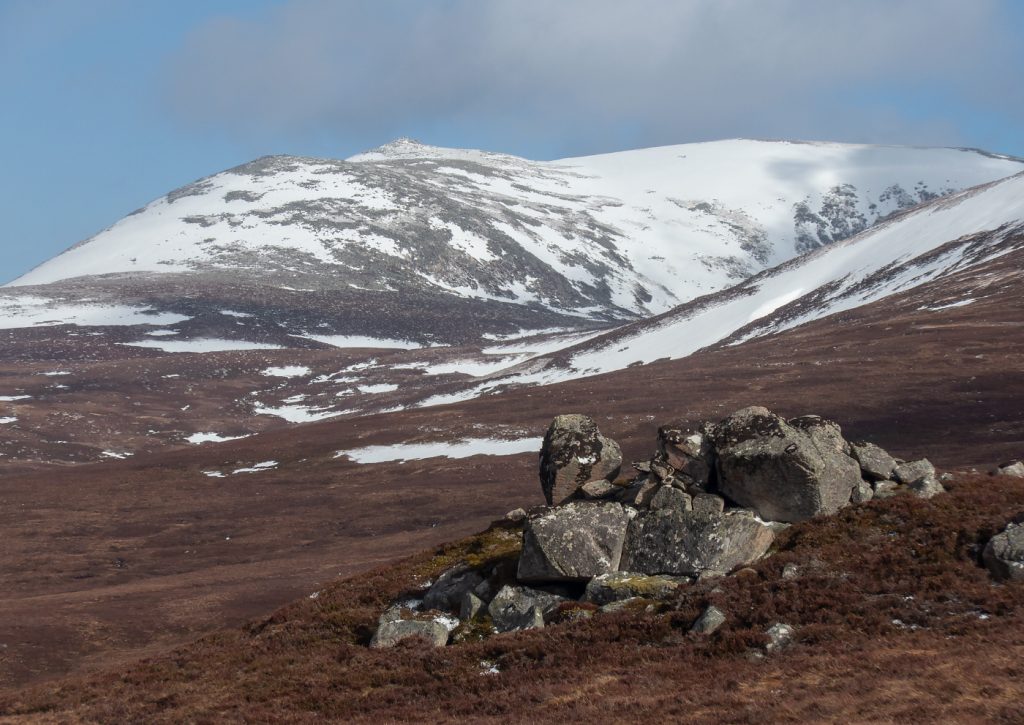
I had a brief forage into the heather again near a waterfall, but too steep to get into position for a good shot, and I’d used my allocation of risk for the day. The sun was getting low and the forest glowed pleasantly. With a few minutes spare near the end I pottered around the rocks at the bridge. Crossing over, the classic view of the river and The Stuic one would never have guessed at the ferocious weather higher up.