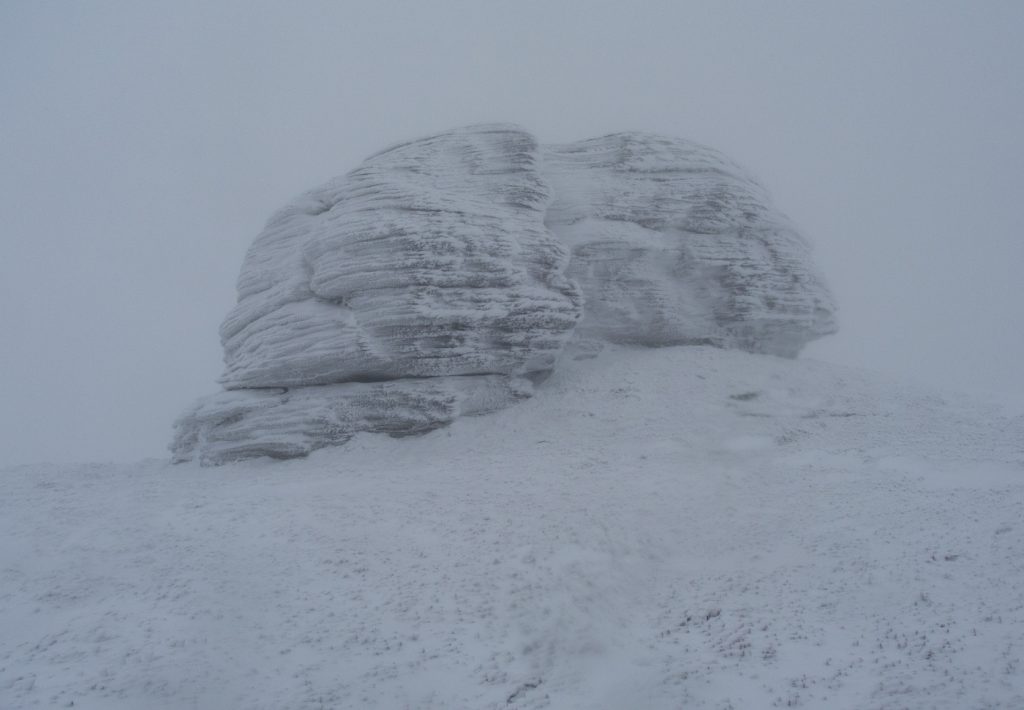
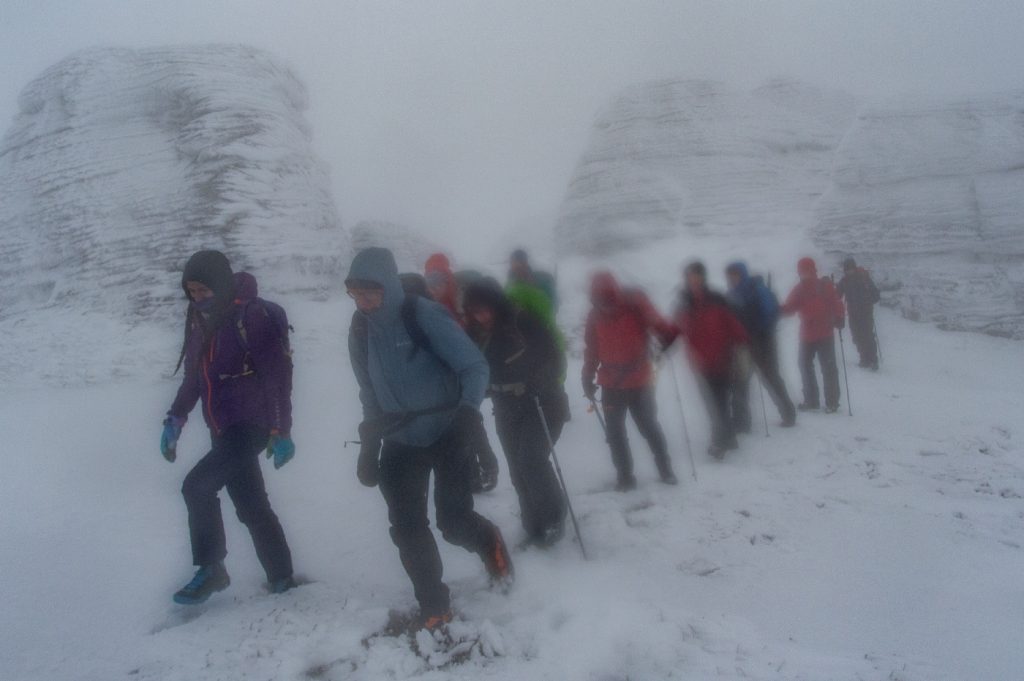
There was no let up in February – grey zone continued with not a glimpse of sunlight, Aberdeen setting new records for the longest time without sun, and many places getting the better part of a year’s rainfall in a month. A strong Easterly wind had the Cairngorm Club trip to Ben Rinnes flip direction to save being blasted icily all day in our faces. Heading up the tourist path it wasn’t long before we headed above the snowline, first just a sprinkling but soon enough getting more arctic with rocks and trees festooned in rime.
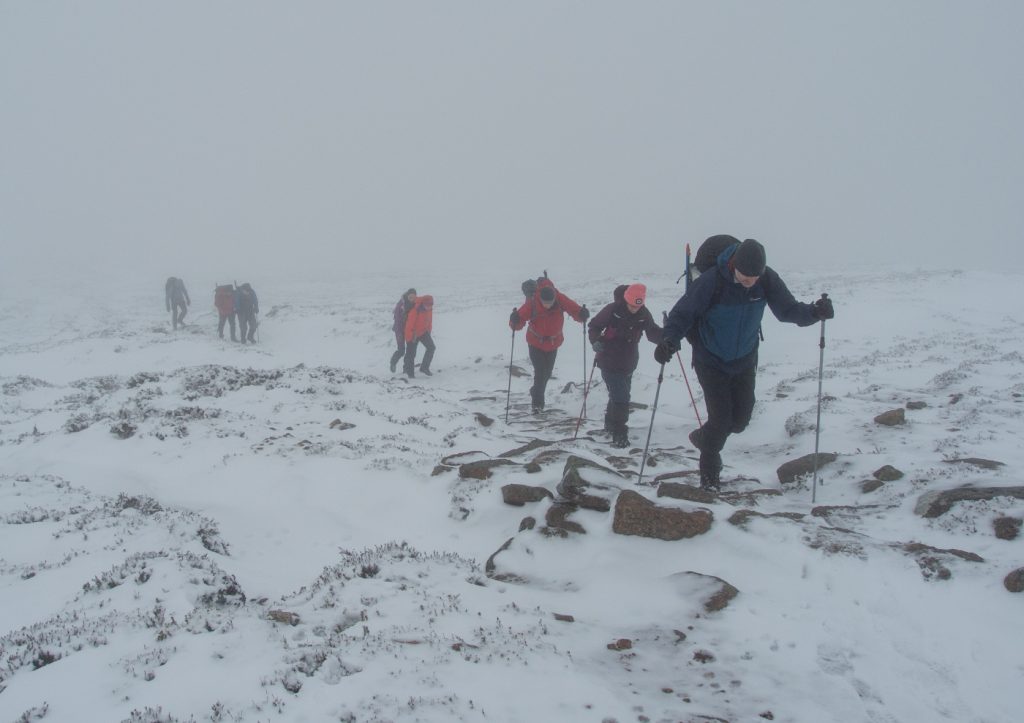
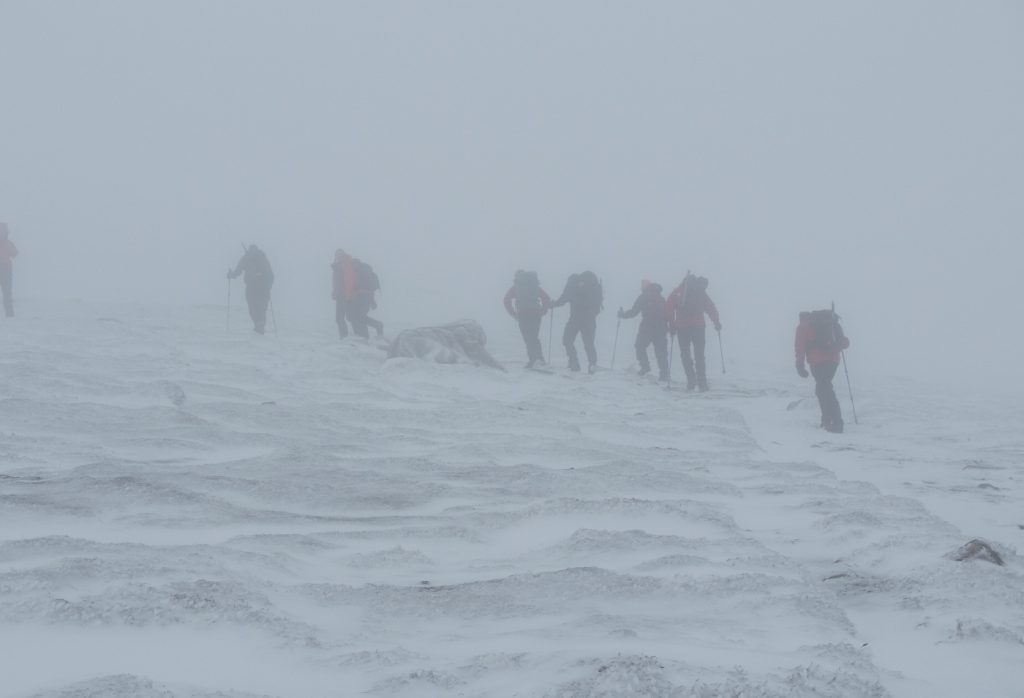
Visibility varied between 10-50 metres and although I wasn’t the organiser of this trip, and the organisation was inadvisably casual for such conditions, I decided to assist at the tail end of the “pack” as we had a few beginners, for which the conditions were likely to be challenging.
There’s a knack to managing groups in low-visibility winter conditions and the way we proceeded here wasn’t great; “stompers” out front soon outpaced everybody, stringing out the group to dribs and drabs in a stop-start fashion – those at the back catch up but don’t get a rest, those at the front have to stop and cool down too long. It’s better to have a moderate pace and keep everybody together – this needs good comms before setting off to manage expectations and make sure everybody is on the same page. That hadn’t happened either, so there was some frustrations between the small clusters that formed. Fortunately somebody had suggested to reverse the original direction of the route to the organiser – keeping what would have been a stinging wind in our backs and out of our faces for the day.
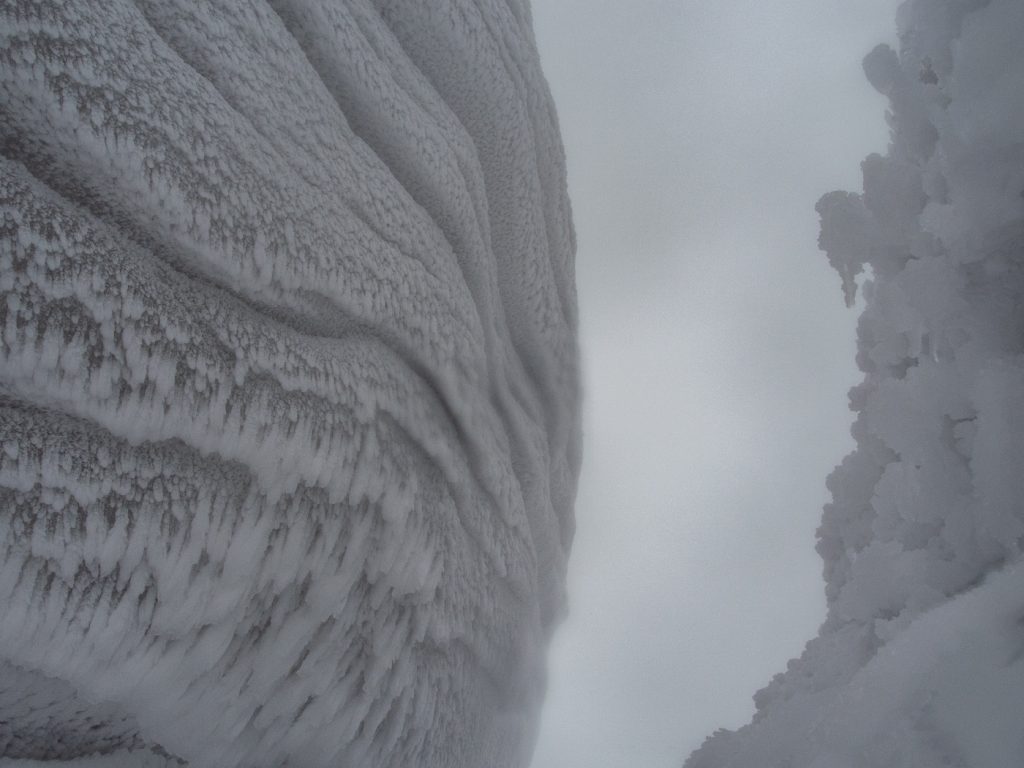
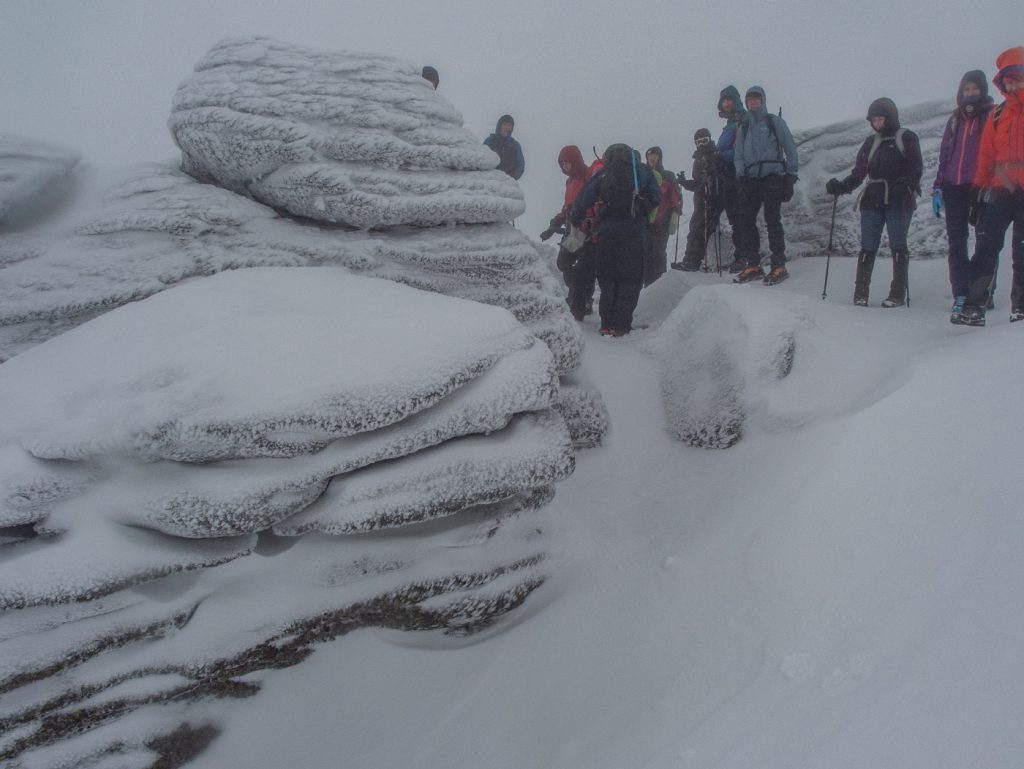
Soon the evidence of blown drizzle and spindrift over a period showed on anything solid protruding – rocks and trees caked in rime ice, swirled by the air flowing along their surfaces.
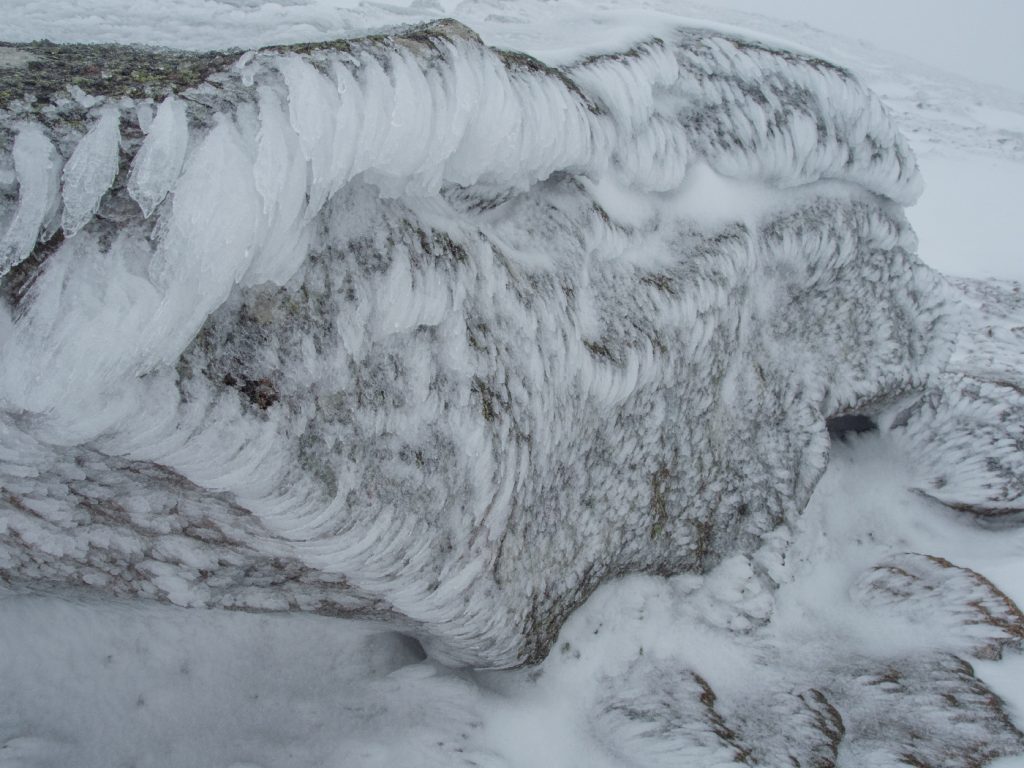
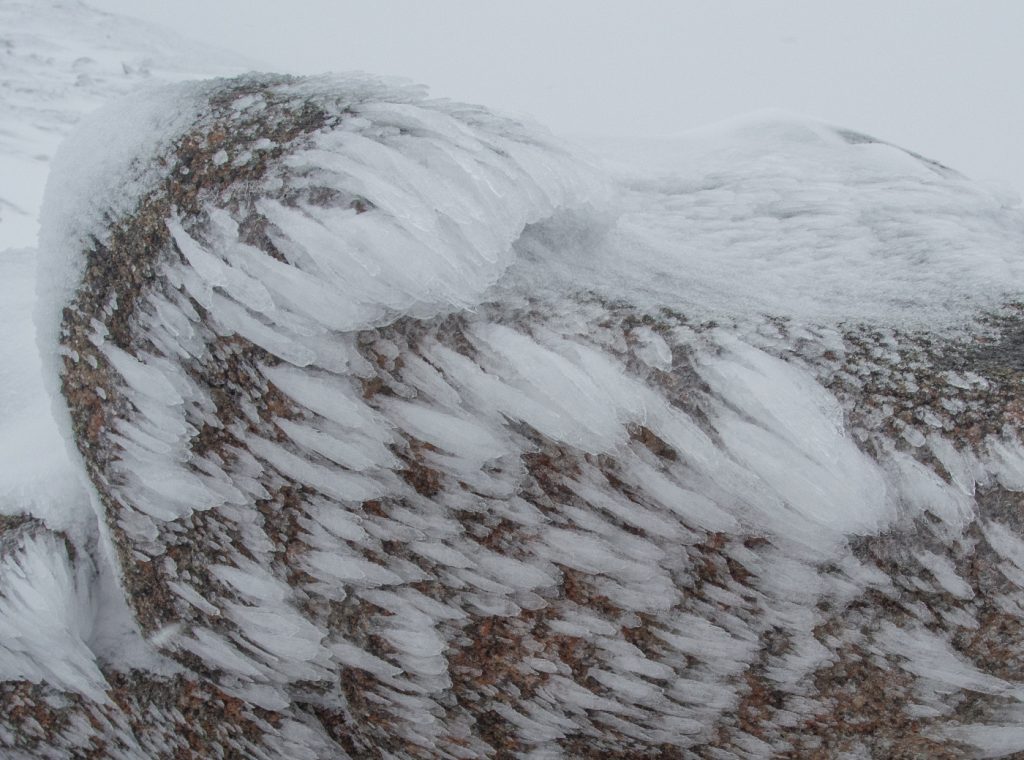
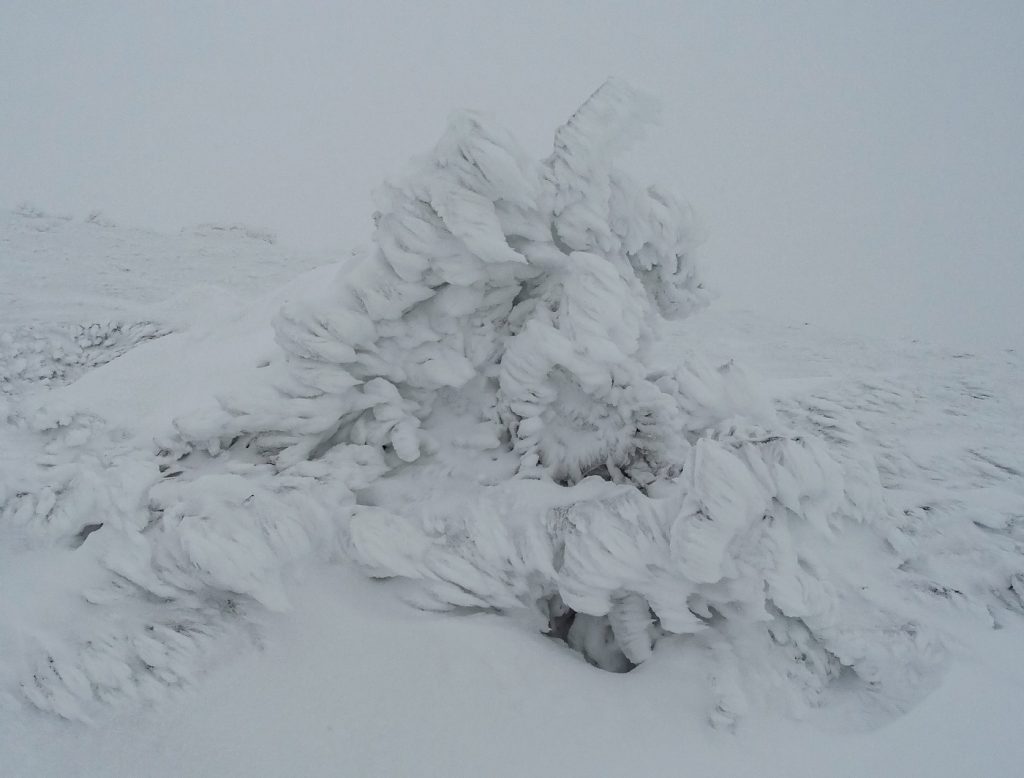
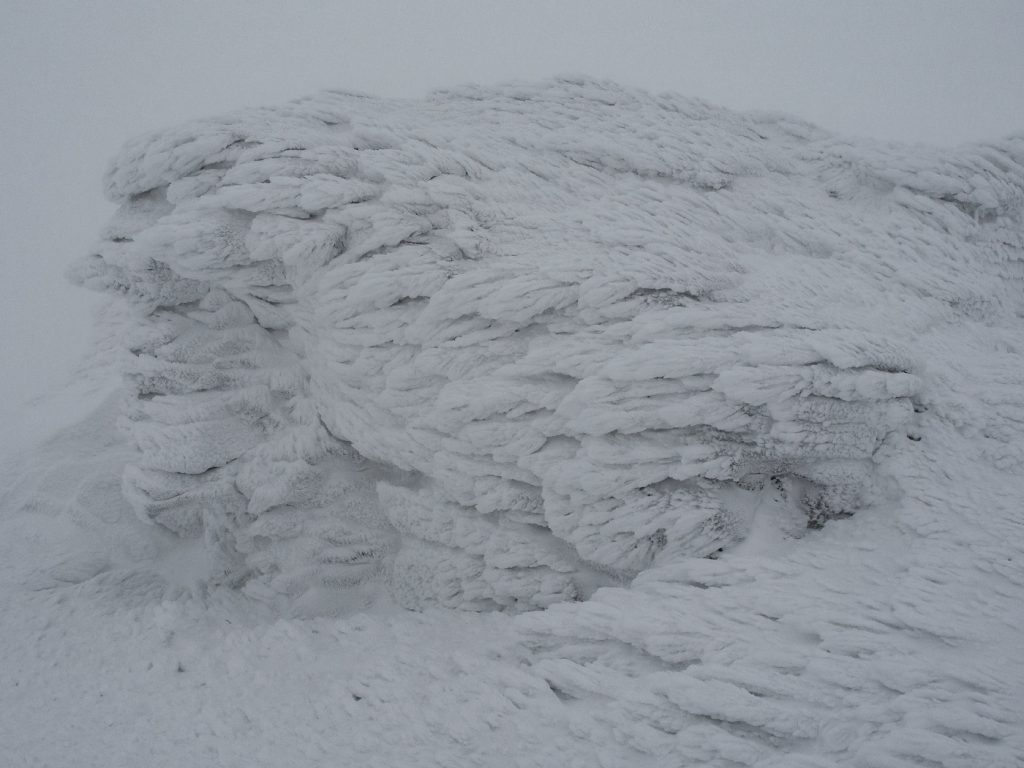
At the top, the new indicator was admired (the whole of the concrete pillar was repaired and encased in steel plate albeit encrusted, but we could see the top plate) and then we climbed around the back of the tor to seek shelter for a break – the rocks impressively rimed.
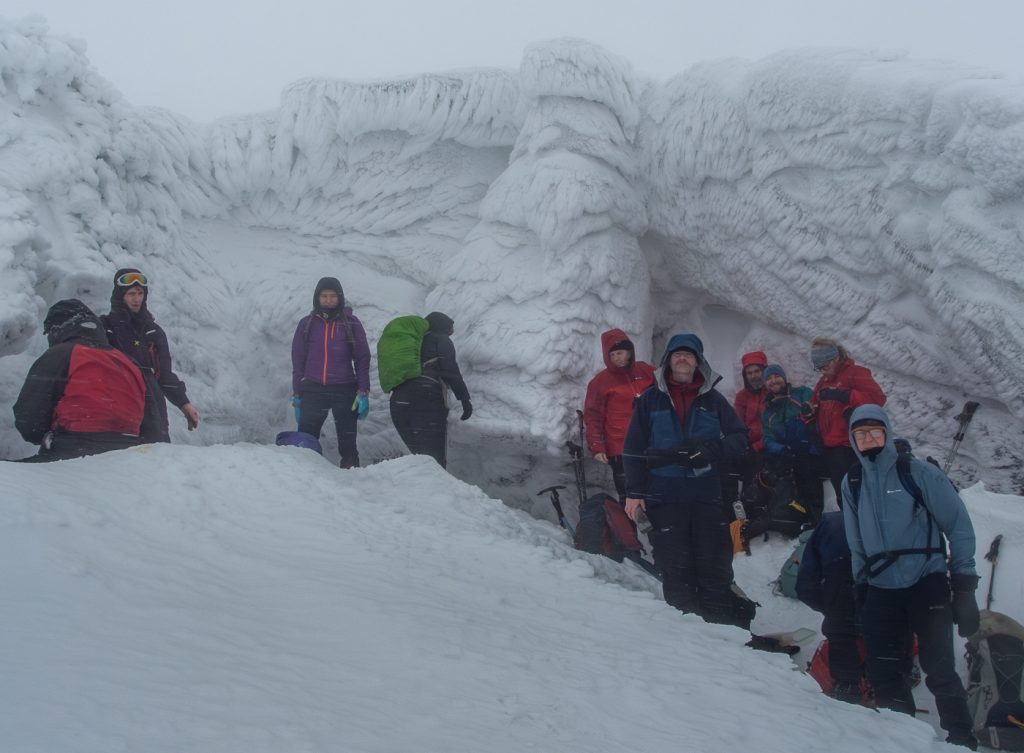
Next it was off into the white zone, across the plateau to the visit the other “scurrans” (rock outcrops). I calculated distances and times and somebody out front worked a bearing, and eventually the tor called Lady’s Chair loomed suddenly out of the gloom.
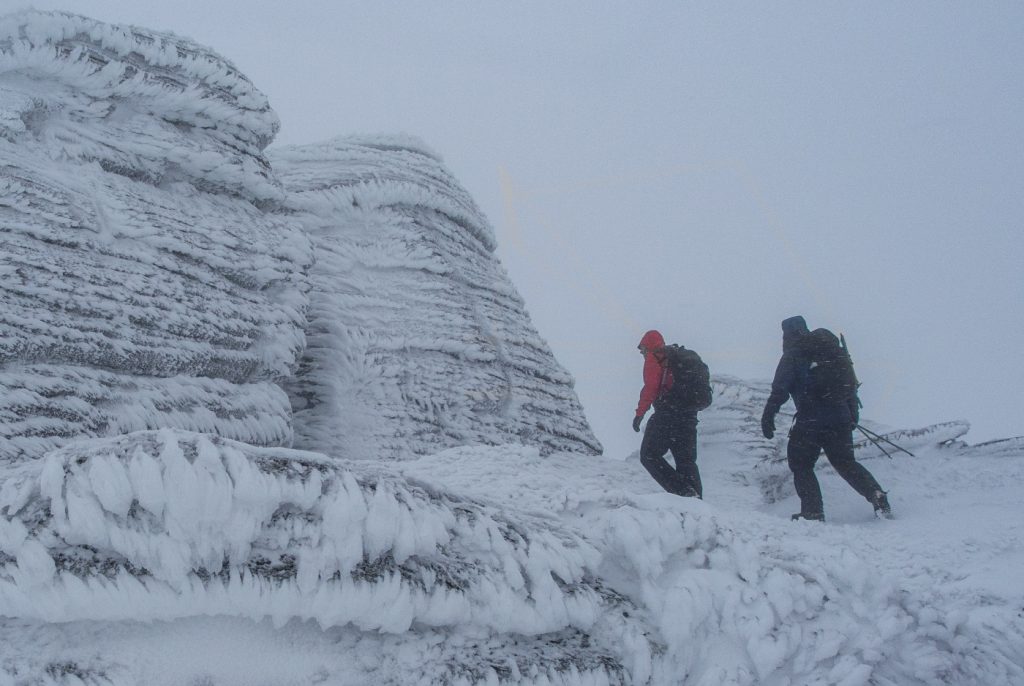
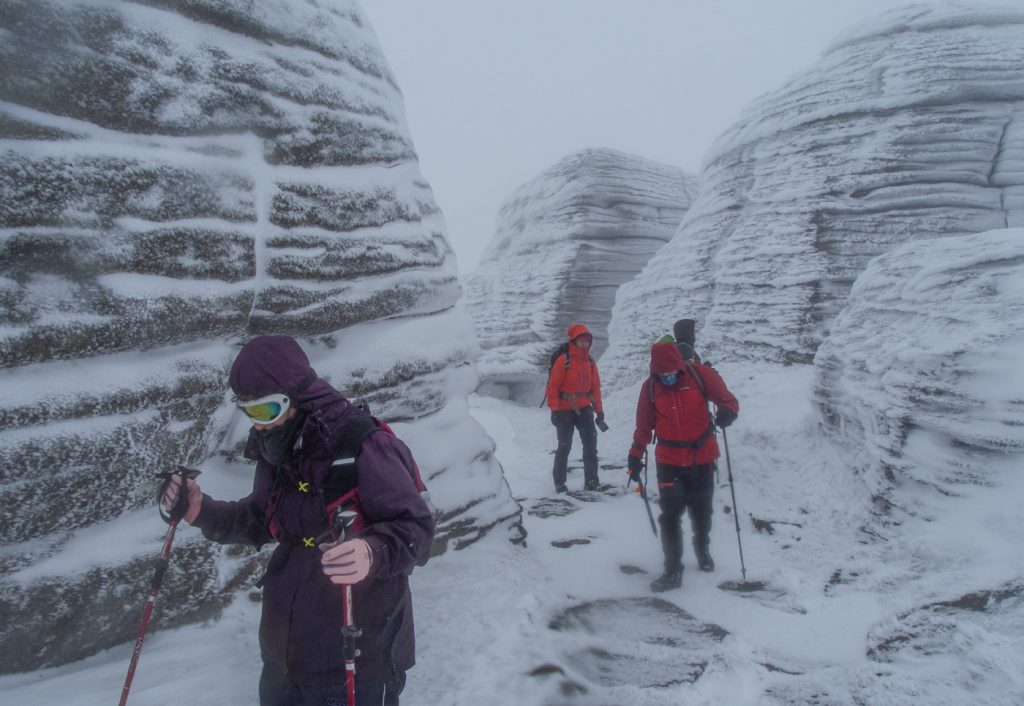
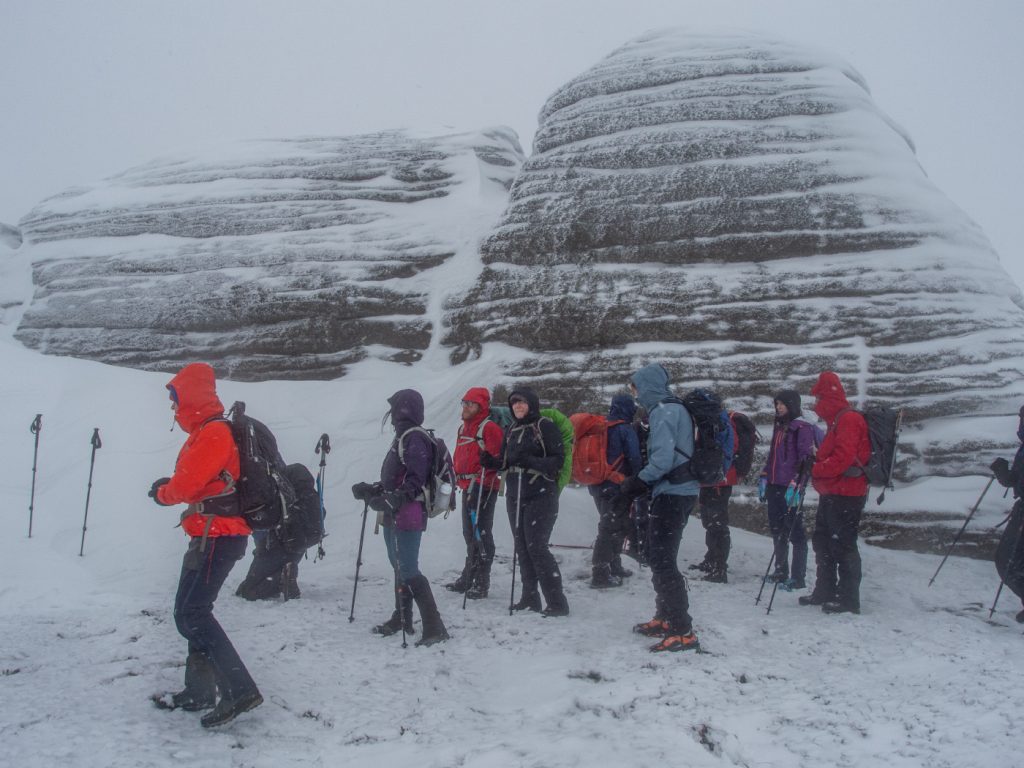
It’s not far from there to Scurran of Well, where we took shelter again. Unlike our last visit, we didn’t scramble about on top to see the “well” as bit windy and icey. A few tots of whisky did the rounds, and I got out a spare pair of mitts for somebody suffering with thin gloves that were also soaked. I always take multiple pairs of gloves on days like these – it’s probably the most common kit failure when you have a group that has those new to mountains in the Scottish winter (the second would probably be crampons/spikes, either not good quality or poorly fitted).
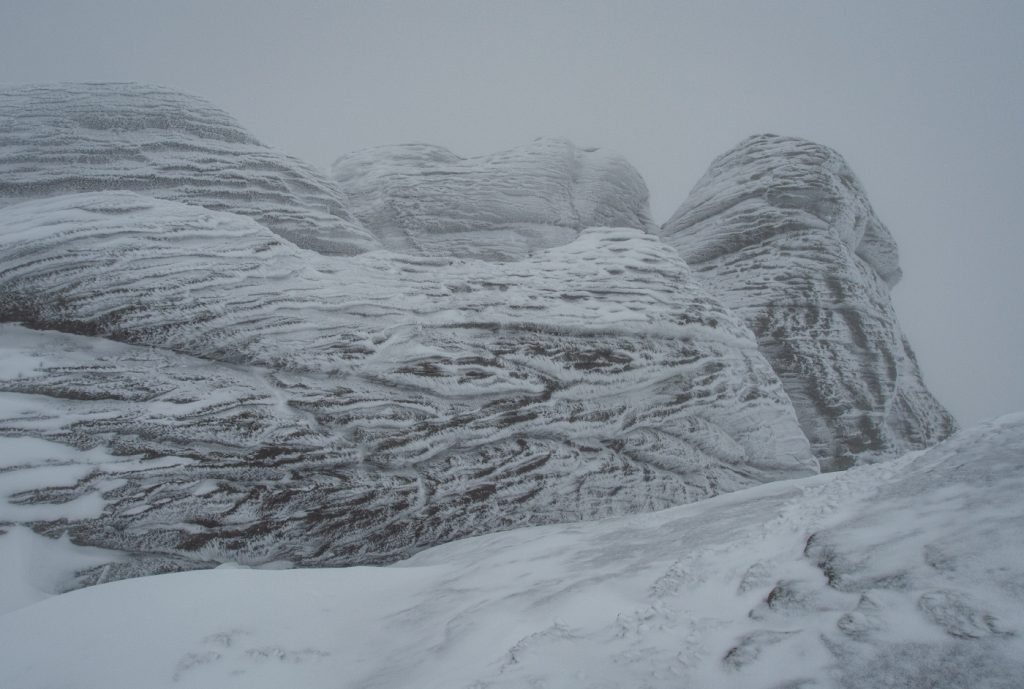
We headed off back past Lady’s Chair, followed our tracks for a bit then turned towards our last Scurran (of Morinsh).
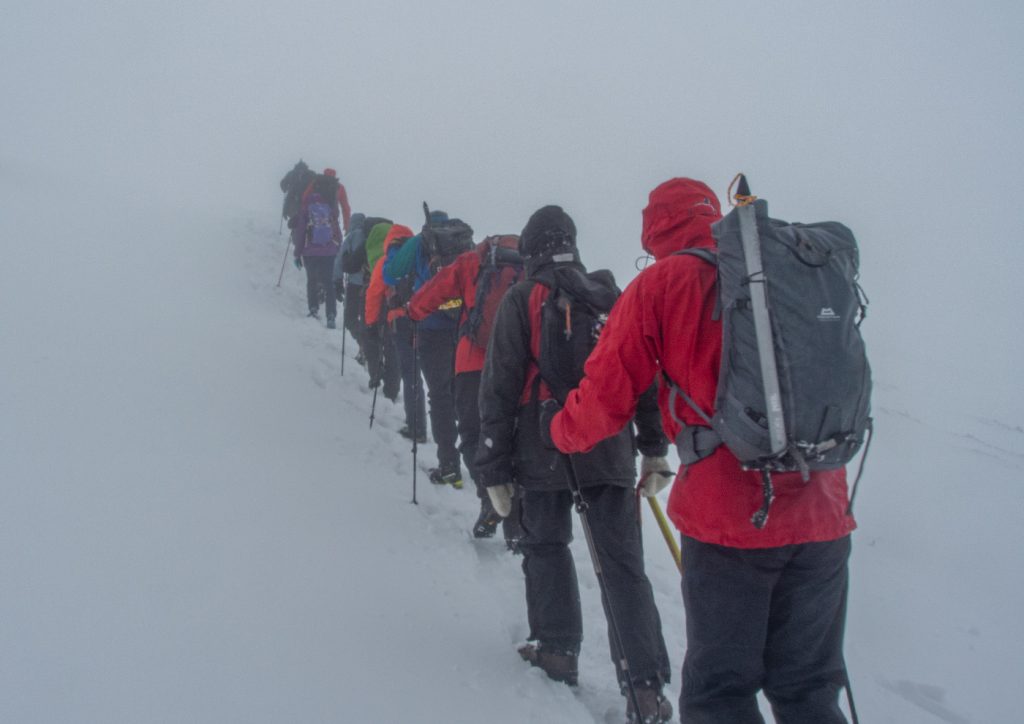
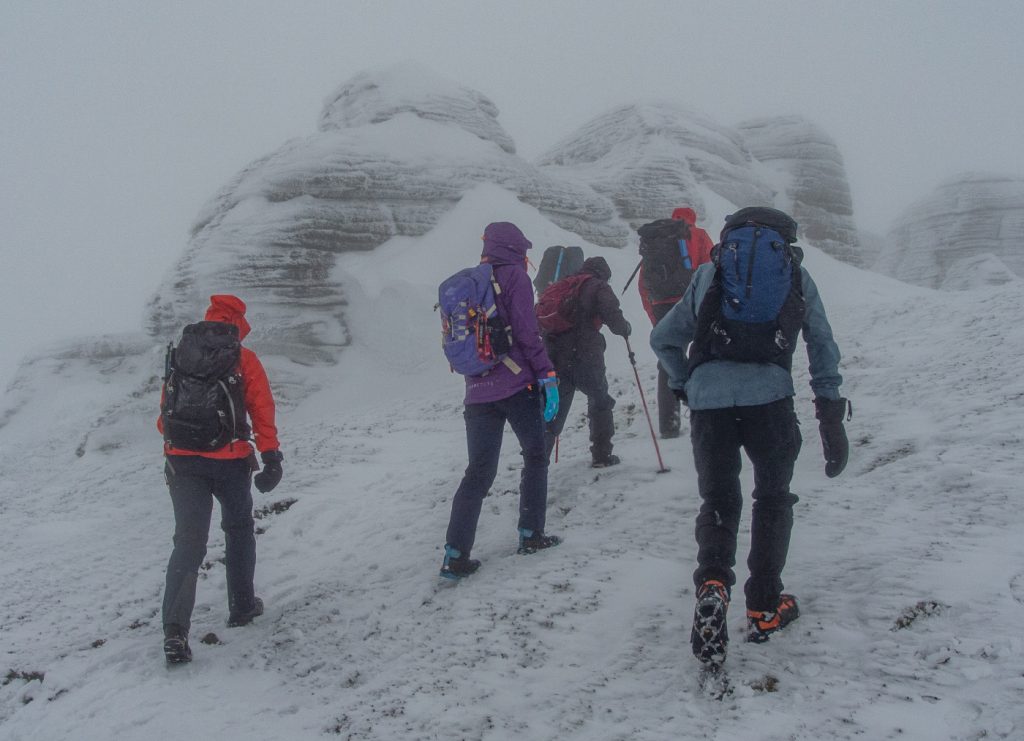
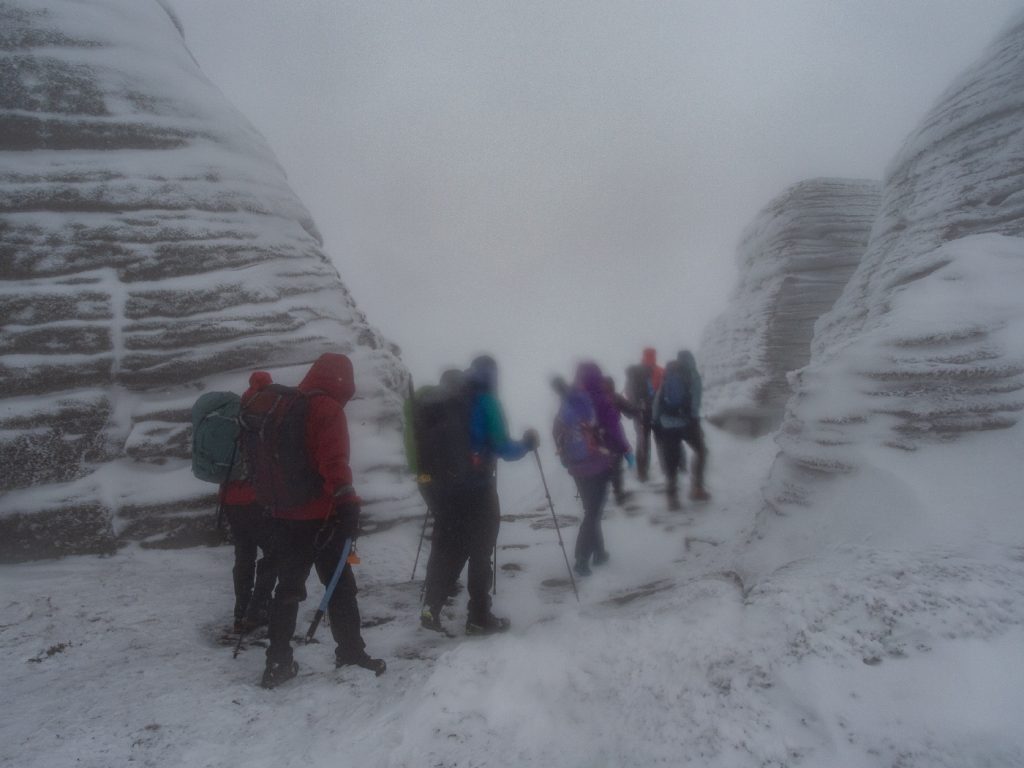
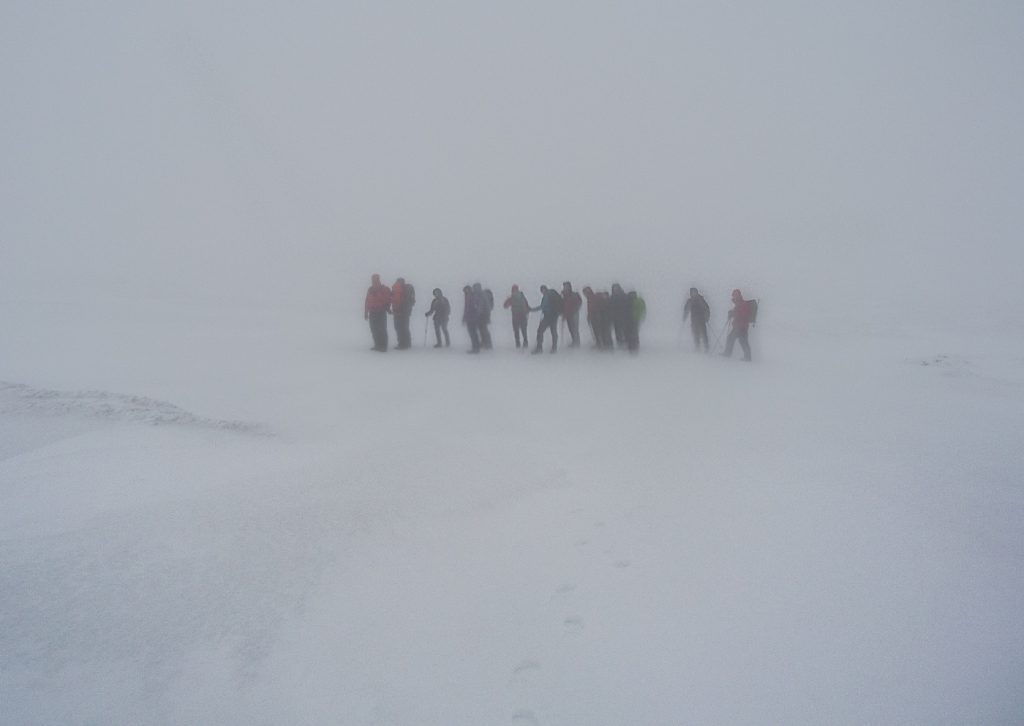
I’d pondered whether the weeks of SE winds would have accumulated deep snow in leeward slopes, and here there was exactly that – many feet of it. I scraped a “hasty pit” to see if it was layered or stable; there was a chance further in the route we’d encounter a short and steep lee slope, and best to have an idea in advance before venturing across such a snow field.
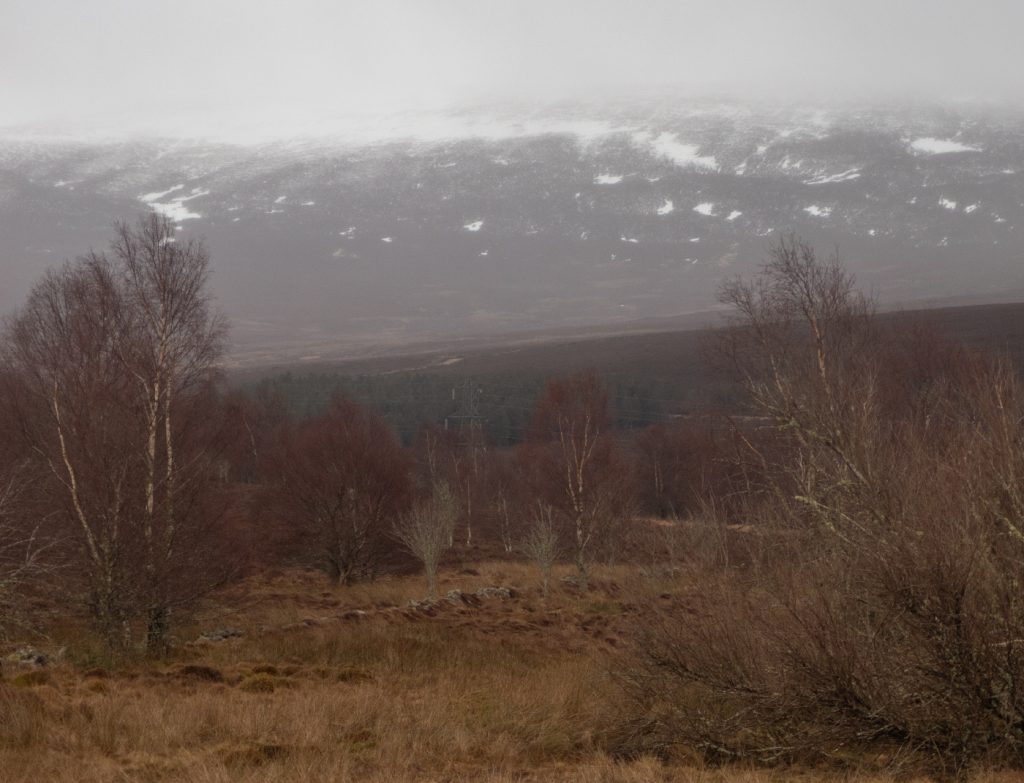
Fortunately as we headed West, the snow fields were further round to the north and the snow wasn’t deep, but soon enough the heather was. There’s a path on maps here, but Strava heatmap shows nobody ever visits this side, and the paths were overgrown. Although now in rough heather, we were glad of some visibility at last.
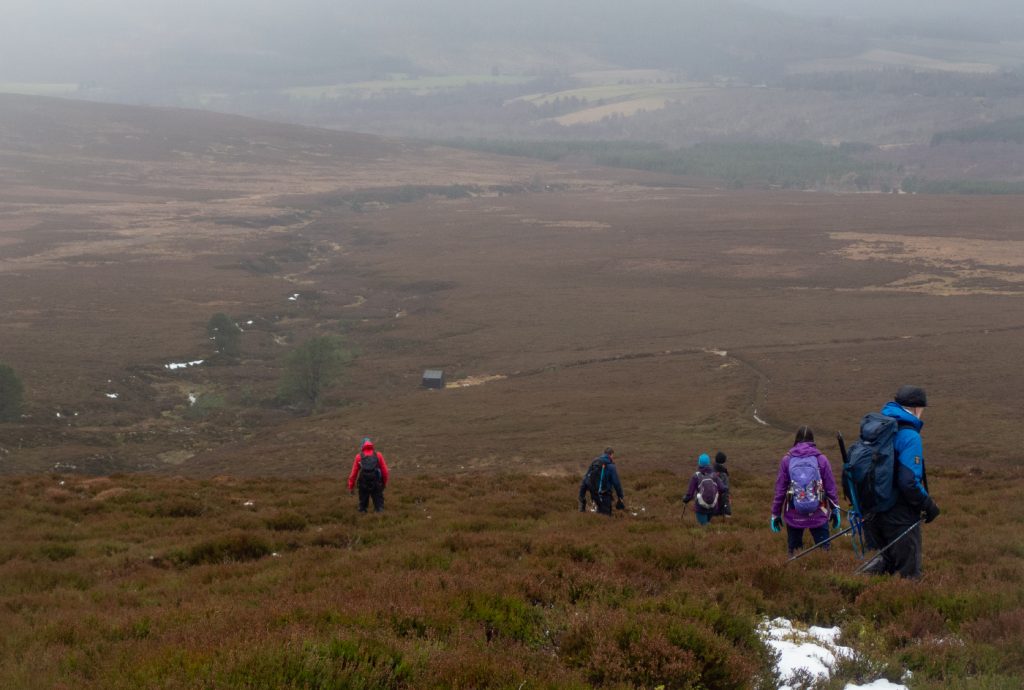
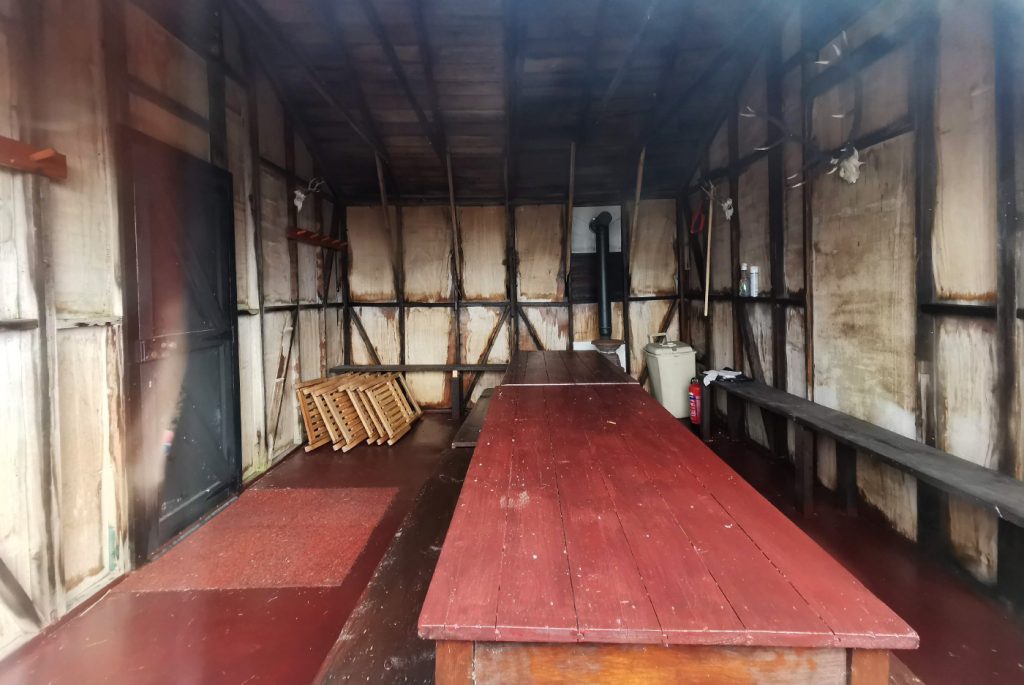
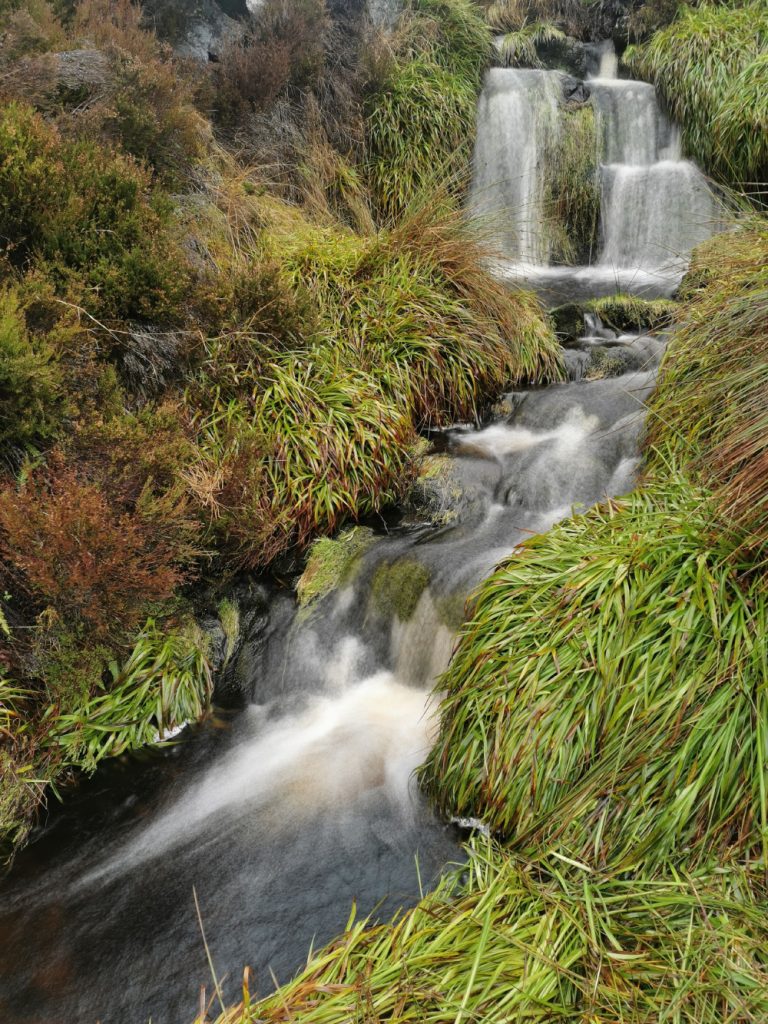
We had another stop beside a shooting hut (locked) and had a nosey at the waterfall on the map on the burn of Lyneriach (quite small). From here on it was easy street – a landrover track out to Marionburgh farm. The track passed through woods, sprinkled with mossy walls and ruins where old crofts used to be. A table there was handy for changing out of soggy gear before reembarking the bus.
We’d finished in quite good time – although the conditions weren’t easy, it was a relatively short route at about 15km. The pub stop at Dufftown then allowed for sneaking a second pint (albeit the Stillman like many small town pubs has a very limited selection of ales). It’s always good to have a blether to unwind after a day out, and particularly so for those new to harsh winter conditions, there’s a real sense of achievement in being out on the mountains in it.